
High-Performance MOF Powder Products
Industrial-grade Metal-Organic Frameworks manufactured to precise pore dimensions and high specific surface area tolerances.

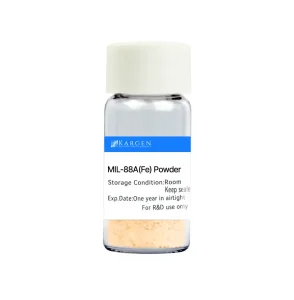
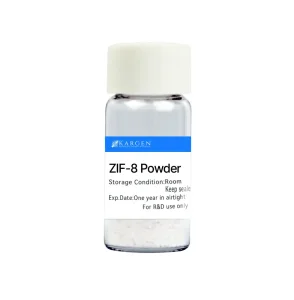
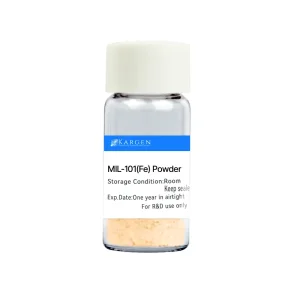


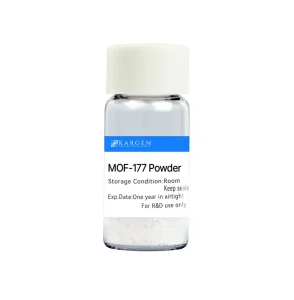

1. Crystallographic Architecture & Synthesis Dynamics of HKUST-1 (Cu-BTC)
HKUST-1 (Hong Kong University of Science and Technology-1), chemically designated as copper benzene-1,3,5-tricarboxylate ($\text{Cu}_3(\text{BTC})_2$), stands as a cornerstone material within the Metal-Organic Framework (MOF) paradigm. Characterized by its face-centered cubic crystal structure with space group $Fm\bar{3}m$, HKUST-1 comprises dimeric copper paddle-wheel nodes bridged by rigid trimesate organic linkers. This three-dimensional coordination polymer features an intricate network of intersecting 3D porous channels with pore diameters measuring approximately 9 Å × 9 Å and smaller pocket windows of 6 Å.
When evaluating global supply channels, prospective procurement specialists and chemical process engineers must distinguish between analytical laboratory-scale synthesis and continuous industrial mass-production. Industrial-grade HKUST-1 exported from specialized Chinese chemical manufacturing hubs utilizes optimized solvothermal, mechanochemical, or electrochemical crystallization pathways. High-efficiency crystallization ensures optimal specific surface areas—typically measured via Nitrogen Physisorption isotherms using the Brunauer-Emmett-Teller (BET) model—yielding values between 1,800 $\text{m}^2/\text{g}$ and 2,200 $\text{m}^2/\text{g}$, accompanied by total pore volumes ranging from 0.75 to 0.85 $\text{cm}^3/\text{g}$.
| Physicochemical Parameter | Laboratory Grade Standard | Industrial Export Grade (China OEM) | Analytical / Test Method |
|---|---|---|---|
| Chemical Formula | $\text{C}_{18}\text{H}_6\text{Cu}_3\text{O}_{12}$ | $\text{C}_{18}\text{H}_6\text{Cu}_3\text{O}_{12} \cdot x\text{H}_2\text{O}$ | ICP-OES / Elemental Analysis |
| BET Specific Surface Area | 1,500 – 1,800 $\text{m}^2/\text{g}$ | 1,850 – 2,200 $\text{m}^2/\text{g}$ | $\text{N}_2$ Adsorption Isotherms (77K) |
| Micropore Volume | 0.65 – 0.72 $\text{cm}^3/\text{g}$ | 0.75 – 0.83 $\text{cm}^3/\text{g}$ | t-plot / Horvath-Kawazoe Method |
| Thermal Stability (in $\text{N}_2$) | Up to $220^\circ\text{C}$ | Up to $240^\circ\text{C}$ | Thermogravimetric Analysis (TGA) |
| Bulk Density (Powder) | 0.35 – 0.45 $\text{g}/\text{cm}^3$ | 0.48 – 0.55 $\text{g}/\text{cm}^3$ (Pelletized option) | Tap Density Volumetry |
| Purity Level | $\ge 98\%$ | $\ge 99.5\%$ (Phase Pure) | Powder X-ray Diffraction (PXRD) |
Why Leading Global Enterprises Source HKUST-1 from China
Transitioning from high-cost laboratory synthesis to ton-scale commercial availability through integrated precursor ecosystems and advanced quality control systems.
Complete Upstream Integration
China houses the world's most centralized manufacturing infrastructure for critical organic ligands—specifically Benzene-1,3,5-tricarboxylic acid (Trimesic Acid, BTC)—and high-purity inorganic copper salts ($\text{Cu(NO}_3)_2 \cdot 3\text{H}_2\text{O}$ or $\text{Cu(CH}_3\text{COO})_2$). This raw material proximity lowers core manufacturing costs by up to 60% compared to Western synthesis routes.
Greener Scale-Up Methodologies
Advanced Chinese factories have pioneered environmentally sustainable, solvent-reduced, and aqueous-assisted synthesis methods. By replacing toxic N,N-dimethylformamide (DMF) solvent systems with ethanol-water mixtures or continuous mechanochemical extrusion, batch yield consistency is elevated while drastically mitigating regulatory overhead and hazardous waste creation.
Rigorous Quality Verification
Leading exporters implement fully integrated digital QA/QC systems. Every export shipment is verified through multi-point diagnostic testing, including Powder X-Ray Diffraction (PXRD) for crystal phase verification, Nitrogen Physisorption for surface area compliance, and Thermogravimetric Analysis (TGA) to ensure complete activation without framework collapse.
Industrial Applications & Macro-Level Engineering Solutions
How HKUST-1 drives technological breakthroughs across gas storage, environmental remediation, and specialty gas purification.
Adsorbed Natural Gas (ANG) & Methane Storage
Due to its high volumetric surface area and dense pore architecture, HKUST-1 achieves unmatched gravimetric and volumetric storage capacities for methane ($\text{CH}_4$). Operating at ambient temperatures and moderate pressures (35–80 bar), HKUST-1-filled ANG pressure vessels allow clean-fuel vehicles and stationary storage systems to store up to 230 $\text{cm}^3\text{(STP)}/\text{cm}^3$, reducing compressing energy requirements by over 40% relative to traditional Compressed Natural Gas (CNG) cylinders operating at 250 bar.
Semiconductor Specialty Gas Scrubbing
Microelectronic fabrication facilities demand ultraclean process gas streams. HKUST-1’s coordinatively unsaturated $\text{Cu}^{2+}$ metal sites exhibit extreme binding specificity toward toxic, corrosive, and polar contaminant species, including ammonia ($\text{NH}_3$), hydrogen sulfide ($\text{H}_2\text{S}$), and phosphine ($\text{PH}_3$). Incorporating HKUST-1 extrudates into point-of-use gas purifiers ensures sub-ppb (parts-per-billion) contaminant thresholds without degrading carrier gas matrices.
Carbon Capture & Flue-Gas Fractionation
Addressing industrial decarbonization mandates, HKUST-1 operates as a high-efficiency solid adsorbent for post-combustion carbon dioxide capture ($\text{CO}_2/\text{N}_2$ separation). The quadrupole moment of $\text{CO}_2$ interacts strongly with the open copper centers, generating high thermodynamic selectivity. When integrated into Vacuum Swing Adsorption (VSA) or Temperature Swing Adsorption (TSA) units, HKUST-1 reduces thermal regeneration energy costs by 35% compared to aqueous monoethanolamine (MEA) solvent scrubbers.
Ethylene/Ethane & Hydrocarbon Separation
In petrochemical refineries, separating ethylene ($\text{C}_2\text{H}_4$) from ethane ($\text{C}_2\text{H}_6$) traditionally requires energy-intensive cryogenic distillation. HKUST-1 offers selective $\pi$-complexation with olefinic double bonds, allowing energy-efficient ambient separation. Process modeling confirms that substituting cryogenic columns with HKUST-1 packed beds slashes overall capital expenditures (CAPEX) and operating expenses (OPEX) in olefin purification circuits.
Mastering Structural Shaping & Hydrothermal Stability
Overcoming the Hydrothermal Sensitivity Bottleneck
A historically documented limitation of native HKUST-1 powder is its susceptibility to structural degradation when exposed to liquid water or high relative humidity ($\text{RH} > 70\%$) environments over extended durations. The coordinated water molecules can displace the carboxylate oxygen atoms on the copper paddle-wheel node, causing structural framework collapse.
To solve this, advanced Chinese manufacturers and exporters have engineered secondary modification protocols. By applying ultra-thin hydrophobic polymer skins (such as polydimethylsiloxane, PDMS) or incorporating trace fluoro-ligands during crystallization, superhydrophobic HKUST-1 composites are produced. These engineered variants retain over 92% of their baseline BET surface area even after exposure to 85% RH for 30 consecutive days, making them commercially viable for outdoor industrial adsorption beds.
Extrudates & Granules
Converting loose HKUST-1 micro-powders into 1.5mm–3.0mm cylindrical extrudates or spherical beads using inert, high-porosity binders (such as methylcellulose or colloidal silica). Formulated pellets maintain high mechanical crushing strength (>25 N/pellet) while minimizing pressure drop across fixed adsorption beds.
Monolithic Honeycombs
Washcoating high-purity HKUST-1 onto ceramic or metallic honeycomb substrates. Ideal for high-throughput, low-pressure-drop gas conditioning systems, such as automotive HVAC cabin air filtration and industrial stack gas VOC abatement devices.
Mixed Matrix Membranes (MMMs)
Incorporating sub-micron HKUST-1 particles into polymeric matrices (such as polyimides, polysulfone, or Matrimid®). The open copper sites dramatically increase membrane gas permeability and selectivity for target industrial gas separations.
Global Enterprise Procurement Guide & Compliance Standards
Procuring MOFs at commercial scale requires rigorous vendor evaluation. International buyers must verify that candidates adhere to international chemical safety, regulatory registration, and supply chain consistency protocols. When issuing Request for Quotations (RFQs) to HKUST-1 exporters, procurement directors should require documentation on four core pillars:
1. REACH & TSCA Compliance
Ensure the chemical manufacturer holds valid EU REACH registration dossiers and US EPA TSCA inventory clearances for Cu-BTC derivatives, guaranteeing seamless customs clearance and regulatory authorization across European and American markets.
2. Batch-to-Batch Consistency
Validate that the factory operates automated batch synthesis reactors with inline spectroscopy monitoring. Surface area, crystal phase purity, and moisture content variance must not exceed $\pm 2.5\%$ across multi-ton production runs.
3. Specialized Export Packaging
High-quality HKUST-1 is highly hygroscopic in its activated state. Leading exporters ship activated powders in hermetically sealed aluminum foil vacuum bags protected by argon/nitrogen blanket atmospheres inside UN-rated fiber drums.
4. Custom Particle Size Tuning
Whether your process requires ultra-fine sub-micron crystals ($D_{50} \approx 0.5\,\mu\text{m}$) for membrane casting or larger micro-crystals ($D_{50} \approx 20-50\,\mu\text{m}$) for loose-fill beds, your supplier must offer tailored milling and classification services.
Technical & Commercial Inquiry Knowledge Base
Additional Metal-Organic Framework Solutions
Explore complementary MOF grades for environmental remediation, gas separation, and specialized catalytic applications.





Request Your Technical Data Package & Sample Kit
Accelerate your research or commercial application with high-purity, ton-scale HKUST-1 and custom MOF formulations delivered worldwide.