
High-Performance Materials for Inert Gas Purification
Engineered porous powders optimized for trace contaminant removal, noble gas recovery, and ultra-pure gas storage systems.



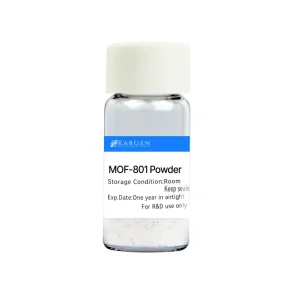



The Paradigm Shift in High-Purity Inert Gas Supply Chains
Transitioning from Conventional Cryogenic Distillation to Advanced MOF-Assisted Adsorption Matrices for Semiconductor, Aerospace, and Nuclear Applications
In modern industrial engineering, the demand for high-purity inert gases—specifically Helium (He), Argon (Ar), Neon (Ne), Krypton (Kr), Xenon (Xe), and Ultra-High Purity Nitrogen (N₂)—has transcended basic atmospheric displacement. Today, high-tech manufacturing ecosystems including extreme ultraviolet (EUV) photolithography, sub-nanometer semiconductor fabrication, titanium additive manufacturing, and quantum cooling demand purity levels exceeding 99.9999% (6N grade), with residual oxygen, moisture, and carbon traces controlled to sub-parts-per-billion (ppb) thresholds.
Information Gain Insight: Standard cryogenic air separation units (ASUs) incur enormous thermal overhead when isolating rare noble gases like Krypton, Xenon, and Neon. By integrating targeted Metal-Organic Frameworks (MOFs)—such as MIL-53(Al), MOF-74(Mg), and ZIF-67—into pressure-swing adsorption (PSA) and temperature-swing adsorption (TSA) beds, gas suppliers achieve up to 40% reduction in energy expenditure while boosting noble gas recovery yields to >99.2%.
As qualified suppliers and exporters of advanced gas separation media and custom inert gas purification systems, we provide global procurement managers and process engineers with the technical tools needed to navigate strict international compliance standards (CGA, EIGA, ISO 14175). This whitepaper outlines the structural mechanics of modern noble gas purification, key market dynamics driving supply scarcity, and the technical criteria required when auditing certified industrial gas exporters.
Comprehensive Inert Gases List & Engineering Specifications
Understanding physical properties, separation dynamics, and MOF-based purification substrates for industrial noble gas streams.
| Gas Species | Purity Grades | Boiling Pt. (°C) | Key Industrial Applications | MOF Purification Matrix | Trace Impurities Removed |
|---|---|---|---|---|---|
| Helium (He) | 5.0 - 6.0 Grade | -268.9 | MRI Cooling, Semiconductor Carrier, Leak Detection | ZIF-8 / MOF-74(Mg) | N₂, O₂, H₂O, CH₄ |
| Argon (Ar) | 4.8 - 7.0 Grade | -185.9 | TIG Welding, Silicon Crystal Growing, Excimer Lasers | MIL-53(Al) / TYUT-12 | O₂, N₂, Trace Hydrocarbons |
| Xenon (Xe) | 5.0 - 6.0 Grade | -108.1 | Satellite Ion Propulsion, Medical Imaging, Deep UV Lithography | MOF-808 / MIL-100(Cr) | Kr, Air Traces, CO₂ |
| Krypton (Kr) | 4.5 - 5.5 Grade | -153.4 | Insulating Glass Windows, Excimer Lasers, Research Optics | MOF-808 / NH2-MIL-101(Fe) | Xe, Moisture, N₂ |
| Neon (Ne) | 5.0 Grade | -246.1 | DUV Photolithography (193nm Immersion), High-Voltage Indicators | ZIF-67 / MOF-801 | He, O₂, N₂ |
| Ultra-Pure N₂ | 5.0 - 7.0 Grade | -195.8 | Purging, Semiconductor Chamber Inerting, Chemical Blanketing | Al-FUM / MIL-101(Fe) | H₂O, O₂, CO, CO₂ |
Molecular Sieving Dynamics
Metal-Organic Frameworks provide crystalline nanoporosity with aperture sizes tailored to fraction of an Angstrom. This allows precise kinetic separation between gas molecules with near-identical kinetic diameters, such as Argon (3.40 Å) and Oxygen (3.46 Å).
Low Regeneration Thermal Loads
Unlike standard activated alumina or Zeolite 13X beds requiring 300°C+ thermal swing cycles, MOF substrates like MIL-53(Al) and MOF-801 can be fully desorbed at 80°C–120°C, drastically lowering the operating expense (OPEX) of high-purity gas production plants.
Chemical & Hydrothermal Stability
Modern Zr-based (MOF-808) and Al-based (Al-FUM, MIL-53) frameworks exhibit outstanding structural resilience against acidic trace gases and humidity spikes, preventing adsorbent degradation during continuous industrial cycles.
Global Supply Chain Trends & Procurement Demands
Analyzing key structural shifts shaping the global supply, pricing, and export logistics of industrial noble gases through 2030.
Semiconductor Mega-FAB Expansion
The global proliferation of semiconductor foundries in Asia, Europe, and North America has escalated demand for 6N Ultra-High Purity Argon and Neon gas blends. Excimer lasers operating at 193nm require continuous, ultra-pure Neon/Fluorine gas replenishment, forcing suppliers to secure reliable long-term off-take contracts backed by zero-defect purity guarantees.
Geopolitical Supply Risk Mitigation
Historical supply shocks in rare gases (such as Neon and Xenon) highlighted geographic concentration risks. Tier-1 enterprise buyers are aggressively expanding supplier rosters to include ISO-certified Asian exporters capable of providing secondary purification, secure ISO tank container transport, and multi-region regulatory compliance.
Helium Recirculation & Closed-Loop Recovery
With global Helium supplies experiencing periodic shortages (Helium 4.0 crises), industrial users in aerospace welding, MRI systems, and fiber optic drawing are retrofitting facilities with MOF-driven closed-loop recovery skids. These systems capture vent gases, strip atmospheric impurities, and re-compress Helium back to 99.999% purity on-site.
Exporters Compliance Checklist: Leading buyers require suppliers to present batch-specific Gas Chromatography-Mass Spectrometry (GC-MS) and Cavity Ring-Down Spectroscopy (CRDS) analytical certificates. Furthermore, cylinders and ISO tube trailers must comply with DOT-3AA, TPED (2010/35/EU), and ISO 11120 manufacturing specs to ensure seamless customs clearance and intermodal transport safety.
End-to-End Gas Purification & Supply Infrastructure
Custom engineering from molecular material synthesis to skid design and global delivery systems.
Custom MOF Synthesis (OEM/ODM)
We work directly with chemical plants and gas manufacturers to design tailored MOF adsorbents (custom pore sizes, functional linkers like -NH₂ or -OH) that address specialized separation challenges, such as trace hydrocarbons in refinery off-gases or isotopic noble gas separation.
Point-of-Use Purifier Cartridges
For semiconductor process tools, analytical instrumentation (GC-FID/ICP-MS), and laser systems, we supply compact purification cartridges packed with active MOF media. These deliver sub-ppb purity directly at the tool inlet, shielding delicate wafer processes from ambient spikes.
Global Export & ISO Tank Fleet
Our logistical export framework accommodates orders ranging from high-pressure cylinder bundles (MCPs) to 20ft/40ft cryogenic ISO tank containers. All shipments include full safety documentation (SDS), certificate of analysis (COA), and real-time pressure/location telemetry tracking.
Localized Support & Regulatory Compliance
Meeting E-E-A-T criteria through certified testing, international standard compliance, and global engineering assistance.
ISO 17025 Accredited Testing
Every export lot undergoes comprehensive spectral analysis. Our analytical laboratory employs Cavity Ring-Down Spectroscopy (CRDS), Gas Chromatography with Pulsed Discharge Helium Ionization Detector (GC-PDHID), and trace moisture analyzers calibrated to NIST standards.
Full International Compliance
Products and pressure vessels comply with global frameworks: REACH and RoHS for chemical safety, CGA G-11.1 for Argon specs, CGA G-9.1 for Helium specs, and European Directive 2010/35/EU (TPED) for transportable pressure equipment.
24/7 Field Engineering Response
Our senior technical staff—comprising PhD materials scientists and chemical engineers—provide immediate engineering support for gas selection, bed sizing calculations, and troubleshooting gas quality discrepancies anywhere in the world.
Inert Gas Separation Technology Roadmap (2025–2035)
Pioneering advancements in computational MOF design, direct atmospheric rare gas harvesting, and zero-carbon purification operations.
High-Density MOF Granulation
Transitioning from loose powders to durable, low-dust shaped extrudates and spherical beads with binderless formulation, preserving high BET surface area while minimizing bed pressure drop.
AI-Guided Molecular Design
Utilizing generative Machine Learning algorithms to screen millions of hypothetical MOF structures, targeting hyper-selective adsorption matrices for Xenon/Krypton separation at ambient temperatures.
Atmospheric Krypton Capture
Deploying hybrid MOF/membrane contactors capable of extracting trace Krypton and Xenon directly from ambient air filtration plants, reducing dependence on traditional large-scale cryogenic ASUs.
Quantum-Grade Purification
Establishing sub-ppt (parts-per-trillion) purity control media to support fault-tolerant quantum computing systems, cold-atom sensors, and next-generation nuclear fusion fuel-cycle purification.
Inert Gas Procurement & Technical FAQ
Expert responses to standard technical, commercial, and operational questions asked by global procurement teams.
What is the difference between Industrial Grade (4.5N) and Ultra-High Purity (6N) Argon?
Industrial Grade Argon (4.5N) possesses a purity of 99.995%, allowing up to 50 ppm of combined impurities (moisture, oxygen, nitrogen, hydrocarbons). It is suitable for general structural steel welding and basic purging. Ultra-High Purity Argon (6N / 99.9999%) restricts total impurities to <1 ppm, which is mandatory for semiconductor crystal growing, titanium aerospace welding, and analytical carrier gas applications where trace oxygen would cause catastrophic oxidation.
How do Metal-Organic Frameworks (MOFs) outperform conventional Zeolites in noble gas purification?
MOFs offer customizable pore architectures, higher internal surface areas (up to 7,000 m²/g compared to ~600 m²/g for zeolites), and significantly lower regeneration temperatures. Their tunable organic linkers allow chemical engineers to target specific kinetic gas diameters, achieving higher selectivity for noble gases like Krypton and Xenon with reduced parasitic energy consumption.
What container options are available for international bulk exports of inert gases?
We provide multiple transport configurations tailored to logistics requirements: High-Pressure Seamless Steel Cylinders (47L/50L), Multiple Cylinder Packs (MCPs/Bundles of 12 or 16 cylinders), High-Capacity Tube Trailers (for compressed gas), and Cryogenic ISO Tank Containers (for liquid Argon, Helium, or Nitrogen). All vessels comply with international regulations including UN/DOT, TPED, and ISO standards.
How are trace moisture and oxygen measured for gas compliance certificates?
Batch verification is performed using certified Cavity Ring-Down Spectroscopy (CRDS) for moisture down to ppt levels, and Electrochemical or Zirconia Analyzers for oxygen. Gas Chromatography with Pulsed Discharge Helium Ionization Detectors (GC-PDHID) is used to verify trace nitrogen, carbon monoxide, carbon dioxide, and total hydrocarbons. Every export shipment includes an itemized Certificate of Analysis (COA).
Can custom MOF powders be supplied for testing in our pilot gas purification plant?
Yes. We offer sample quantities (from 1g–5g laboratory evaluations up to 50kg pilot batches) for qualified industrial partners. Our technical team assists with pore selection, packing density advice, and temperature swing regeneration parameters to ensure seamless integration into your experimental beds.
Advanced Gas Separation & Adsorption Matrices
Explore our complete inventory of synthesized porous materials engineered for selective gas recovery and trace contaminant removal.




