
Primary Commercial MOF Powders & Formulations
Explore our factory-direct, ton-scale certified Metal-Organic Framework series optimized for hydrocarbon separation, catalysis, and environmental remediation.







Macro Industrial Landscape & The MIL-53 Paradigm
Metal-Organic Frameworks (MOFs) represent a transformative class of porous crystalline materials synthesized through the self-assembly of metal nodes (clusters) and organic linkers. Among the thousands of framework structures documented in academic literature, MIL-53 (Matériaux de l'Institut Lavoisier #53) stands out as an industrial benchmark.
Composed of infinite chains of corner-sharing metal octahedra—most commonly Aluminum (Al3+), Chromium (Cr3+), or Iron (Fe3+)—linked by terephthalate ions (1,4-benzenedicarboxylate), MIL-53 possesses a 3D structural architecture containing diamond-shaped 1D pore channels. The essential feature that differentiates MIL-53 from rigid zeolites and conventional activated carbons is its remarkable flexible "breathing effect."
Under the influence of external stimuli—such as temperature changes, mechanical pressure, or the adsorption of specific guest molecules (e.g., CO2, H2O, Xenon, or short-chain hydrocarbons)—the pore network of MIL-53 reversibly shifts between a Narrow Pore (NP) framework and a Large Pore (LP) structure. This dynamic breathing action provides unprecedented selectivity for gas separation and chemical purification, making verified high-quality MIL-53 MOF exporters essential partners for energy and chemical conglomerates globally.
Core Performance Metrics of Commercial MIL-53(Al)
- Chemical Formula: [Al(OH)(C8H4O4)]n
- BET Surface Area: 1,100 – 1,500 m²/g
- Pore Volume (LP State): ~0.6 - 0.7 cm³/g
- Thermal Degradation Threshold: > 500 °C (in Air/N2)
- Hydrolytic Stability: High (Boiling Water Resistant)
- Channel Free Diameter: 8.5 Å (LP) down to 3.0 Å (NP)
KARGEN Industrial Scale & Scientific E-E-A-T Footprint
Information Gain: MIL-53 Synthesis Routes & Comparative Material Science
Achieving ton-scale reproducibility of MIL-53 without compromising crystal morphology or surface area requires strict engineering over synthesis kinetics. Below is an expert breakdown of mass-production synthesis routes alongside a benchmark matrix comparing MIL-53 against standard commercial sorbents.
Solvothermal / Hydrothermal
Standard green hydro-synthesis utilizing high-pressure autoclaves. Reaction of Al(NO3)3·9H2O and H2BDC in deionized water at 220 °C for 72 hours yields ultra-pure, defect-free crystalline MIL-53(Al) powders with ideal lattice integrity for analytical and medical applications.
Continuous Mechanochemical
Guangdong Advanced Carbon Materials (KARGEN) pioneers solvent-free, high-throughput twin-screw extrusion mechanochemistry. This process eliminates hazardous DMF waste streams, reducing industrial production energy expenditure by over 60% while maintaining BET surface area integrity above 1,200 m²/g.
Post-Synthetic Modification (PSM)
Functionalizing the terephthalate linker (e.g., -NH2, -NO2, -SO3H) alters the breathing transition threshold pressure. Amino-functionalized MIL-53(Al)-NH2 dramatically enhances CO2 affinity over CH4, shifting flue gas separation efficiency into sub-bar operating ranges.
| Framework Class | Metal Node / Linker | Pore Volume (cm³/g) | Thermal Limits | Hydrolytic Stability | Target Industrial Utility |
|---|---|---|---|---|---|
| MIL-53(Al) | Al3+ / Terephthalic Acid | 0.65 (Flexible LP) | 500 °C | Outstanding (pH 1-10) | Breathing Gas Separation, VOC Abatement, AWH |
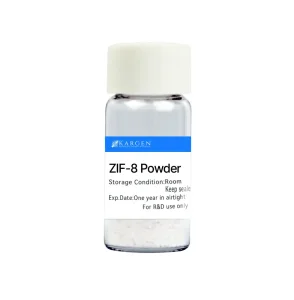
| ZIF-8 | Zn2+ / 2-Methylimidazole | 0.66 (Rigid Pores) | 400 °C | High in Alkaline / Low in Acids | Li-ion Separator Coatings, Hydrophobic CO2 Capture |
| HKUST-1 | Cu2+ / Trimesic Acid (BTC) | 0.78 (Open Metal) | 250 °C | Poor (Moisture Sensitive) | Specialty Gas Purification, Acetylene Storage |
| MIL-101(Cr) | Cr3+ / Terephthalic Acid | 1.90 (Mesoporous) | 350 °C | Exceptional | High-Capacity Water Harvesting, Liquid Catalysis |
| MOF-74(Mg) | Mg2+ / DOBDC | 0.70 (Open Metal) | 400 °C | Moderate | Low-Pressure Flue Gas CO2 Capture |
Global B2B Procurement Demand & Quality Control Protocols
Procuring Metal-Organic Frameworks at multi-ton volumes requires strict quality assurance metrics to guarantee operational continuity in continuous industrial processes such as Pressure Swing Adsorption (PSA) or structured membrane reactors.
Overseas procurement heads and R&D managers often encounter batch-to-batch discrepancies when purchasing from unverified chemical brokers. Common defects include incomplete guest-solvent evacuation (residual DMF blocking pore apertures), phase impurities (unreacted free terephthalic acid crystals), and structural collapse due to improper calcination profile control.
To mitigate procurement risk, KARGEN enforces a 4-tier batch validation protocol for every export lot of MIL-53 MOF powders:
- Powder X-Ray Diffraction (PXRD): Verification of 100% phase purity and crystal lattice consistency against pristine Cambridge Structural Database (CSD) patterns.
- N2 Gas Physisorption (77K): Multipoint BET calculation confirming surface area exceeding contractually agreed thresholds (>1200 m²/g).
- Thermogravimetric Analysis (TGA): Determination of framework thermal stability bounds and confirmation of zero residual toxic solvents.
- Laser Particle Size Analysis (D10, D50, D90): Precise control over powder agglomeration for uniform dispersion in polymer matrices or slurry coatings.
Procurement Risk Mitigation Architecture
100% Customs & REACH Compliance
Complete SDS, HS Code classification (2842.90), REACH registration for European buyers, and UN-certified moisture-proof packaging.
Engineered Granulation & Pelleting
Eliminate pressure drop in packed beds. We supply MIL-53 in micro-spheres, extrudates, and monolith formats using binderless compression.
Rapid Evaluation Protocols
Qualified industrial enterprise partners receive expedited 1-5g sample kits accompanied by batch-specific Certificate of Analysis (CoA).
Macro Industrial Solutions & Sectoral Deployment
Leveraging the unique pore dynamics of MIL-53(Al/Fe) and related crystalline frameworks to solve critical bottlenecks in environmental, energy, and advanced electronics sectors.
Carbon Capture & Direct Air Capture (DAC)
MIL-53's flexible pore structure exhibits step-like adsorption isotherms for CO2. This property allows high working capacity during adsorption cycles with significantly lower regeneration energy requirements compared to liquid amine scrubbers, reducing operational cost (OPEX) in post-combustion flue gas capture.
C2/C3 Hydrocarbon Separation
In petrochemical refineries, separating ethane/ethylene and propane/propylene demands energy-intensive cryogenic distillation. MIL-53 and TYUT-12 MOFs provide molecular sieving selectivity, trapping saturated hydrocarbons while yielding high-purity polymer-grade olefins at ambient temperatures.
Battery Separators & Solid-State Electrolytes
Incorporating ultrafine MIL-53 or ZIF-8 nanoparticles into polyolefin separators enhances electrolyte wetting, suppresses lithium dendrite propagation, and immobilizes polysulfides in Li-S batteries, extending cycle life under fast-charging conditions.
Localized Technical Support & Global Compliance Assurance
Guangdong Advanced Carbon Materials Co., Ltd. (KARGEN) bridges advanced scientific research with international industrial supply chains. Founded by returning PhD scholars from premier European and North American institutes, KARGEN operates as a trusted partner for global clients.
We understand that buying specialty nanomaterials requires more than just shipping a drum of powder. It demands comprehensive technical integration, engineering assistance for bed packing or slurry formulation, and guaranteed legal compliance across international trade zones.
Enterprise SLA Guarantees
-
1 Business Day Inquiry SLA: Direct access to senior MOF application engineers within 24 hours regardless of time zone.
-
OEM/ODM Functionalization: Linker tailoring, pore tuning, and precise particle size adjustments (down to sub-micron or nano-scale regimes).
-
End-to-End Logistics Guarantee: Moisture-proof nitrogen-flushed double drums, temperature-monitored air freight, and hazardous material safety compliance.
Technical Roadmap & Future Commercial Horizons (2025 – 2030)
As industrial scale-up reduces synthesized MOF costs toward parity with specialty zeolites, next-generation deployment will transition from powder adsorbents to structured composite systems.
Phase 1: Continuous Solvent-Free Green Manufacturing (Current Scale)
Eliminating toxic organic solvents (DMF, DEF) in favor of water-based and mechanochemical twins-screw extrusion. Target pricing metrics for bulk MIL-53 and Al-FUM dropping below $30/kg for ton-scale orders.
Phase 2: Mixed-Matrix Membranes (MMMs) & 3D Printed Monoliths
Integrating high-load MIL-53 nanoparticles directly into polymeric hollow fiber membranes and 3D honeycomb ceramic supports for continuous flow gas separation with zero powder elutriation.
Phase 3: Generative AI & Reticular Robotics Discovery
Leveraging machine learning models trained on structural framework datasets to dynamically predict multi-component gas adsorption profiles, enabling rapid custom MOF synthesis within 4-week development sprints.
Frequently Asked Questions (Technical & Procurement FAQ)
Clear answers to crucial engineering, quality assurance, and commercial supply chain questions.
High-Surface-Area & Special Purpose MOF Grades
Explore additional factory-direct Metal-Organic Framework powders including MIL-101, MOF-74, MOF-801, and ZIF series.



Partner with China's Premier Industrial MOF Manufacturer
Contact our doctoral R&D engineering team today for technical datasheets, mass production volume pricing, or custom OEM functionalization requests.