

Featured Materials
Industrial Grade Metal-Organic Framework Powders
Explore our standardized and customized crystalline MOF structures available for immediate sampling, pilot validation, and bulk contract delivery.

Best Customized MOF Powder Metal Organic Frameworks from China Suppliers
View Product Specs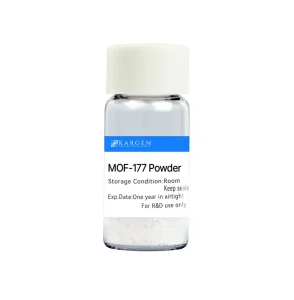
High-Quality MOF-177 Powder Metal Organic Frameworks for Gas Storage
View Product Specs
High-Quality MIL-101(Al) Powder Metal Organic Frameworks (MOFs) Service
View Product Specs
High-Quality MIL-100(Al) Powder Metal Organic Frameworks (MOFs)
View Product Specs
High-Quality MOF-74(Mg) Powder Leading CO2 Adsorption Solutions
View Product Specs
MIL-101(Fe) Powder Metal Organic Frameworks for Adsorption & Catalysis
View Product Specs
High-Quality High Surface Area MOF-177 Powder for Drug Delivery & Storage
View Product Specs
Comprehensive Whitepaper
Engineering Micro-Porosity: The Science & Economics of MOF Crystals
An authoritative analysis on reticular synthesis, pore design, structural stability, and industrial scalability for B2B procurement managers and chemical process engineers.
Metal-Organic Frameworks (MOFs) represent a transformative paradigm in advanced materials chemistry. Composed of metal ions or clusters coordinated to organic linkers (ligands), MOFs create three-dimensional, highly ordered crystalline networks characterized by unprecedented internal surface areas, tunable pore diameters, and customizable chemical functionality. As global industries move toward carbon-neutral manufacturing, zero-emission energy systems, and high-efficiency gas purification, high-quality MOF crystals have shifted from academic curiosities to critical industrial commodities.
Ultra-High Internal Surface Area
With Langmuir and BET surface areas reaching from 1,000 to over 7,000 m²/g, a single gram of optimized MOF crystal provides an internal surface area equivalent to multiple football fields, enabling exceptional volumetric storage capacities.
Atomic Pore Tailoring
Unlike traditional activated carbon or zeolites, MOF pore apertures can be tuned with sub-angstrom precision (from 0.3 nm to 3.0 nm) by altering organic ligand length and metal node geometry, enabling molecular sieve kinetic selectivity.
Low Regeneration Energy
The physical adsorption mechanism (physisorption) governed by Van der Waals forces allows guest gas molecules to desorb under mild temperature or pressure swings, cutting operational energy costs by up to 40% over liquid amine wash systems.
Reticular Chemistry Insight: SBU Design & Linker Functionalization
The foundational strength of MOF architectures relies on Secondary Building Units (SBUs). By coordinating transition metal nodes (such as Zn²⁺, Al³⁺, Fe³⁺, Cu²⁺, Zr⁴⁺) with multidomain organic ligands (imidazolates, carboxylates, phosphonates), precise structural topologies are synthesized—such as sodalite (sod) cages in ZIF-8 or breathing frameworks in MIL-53(Al). Adding functional groups (e.g., -NH₂, -SO₃H, -OH) directly modifies thermodynamic binding affinity for target adsorbates like CO₂, H₂O vapor, and NH₃.
Material Comparison: Standard MOF Framework Families
Selecting the correct MOF crystal supplier requires deep familiarity with specific framework classes. The matrix below outlines operational parameters across premier commercial MOF classes offered by KARGEN:
| Framework Class | Benchmark Exemplars | Metal Node / Organic Linker | BET Surface Area (m²/g) | Thermal & Chemical Stability | Primary Commercial Application |
|---|---|---|---|---|---|
| ZIF Series (Zeolitic Imidazolate) | ZIF-8, ZIF-67, ZIF-93 | Zn²⁺ / Co²⁺ + 2-Methylimidazole | 1,300 – 1,800 | High thermal (>400°C), excellent water/alkali stability | CO₂ Capture, Battery Separator Coatings, VOC Adsorption |
| MIL Series (Materials Institute Lavoisier) | MIL-101(Al), MIL-100(Al/Fe/Cr), MIL-53(Al) | Al³⁺ / Fe³⁺ / Cr³⁺ + Terephthalic / Fumaric Acid | 1,500 – 3,400 | High hydrothermal stability, breathing structural behavior | Atmospheric Water Harvesting, Dehumidification, Catalysis |
| UiO Series (University of Oslo) | UiO-66, UiO-66-NH₂ | Zr⁴⁺ + 1,4-Dicarboxybenzene | 1,100 – 1,600 | Exceptional acid/mechanical stability, stable in aqueous media | Toxic Liquid Waste Removal, Corrosive Gas Purification |
| HKUST Series | HKUST-1 (Cu-BTC) | Cu²⁺ + 1,3,5-Benzene Tricarboxylate | 1,500 – 2,100 | Moderate thermal (<250°C), highly sensitive to moisture | Specialty Semiconductor Gas Purifiers, Acetylene Storage |
| MOF-74 / CPO-27 | MOF-74(Mg), MOF-74(Ni) | Mg²⁺ / Ni²⁺ + 2,5-Dihydroxyterephthalic Acid | 1,200 – 1,500 | High density of open metal sites, moisture sensitive | Low-Pressure CO₂ Capture, Olefin/Paraffin Separation |
Enterprise Solutions
Global Demand Vectors & Macro-Industrial Integration
How multinational engineering firms, energy majors, and electronics producers integrate MOF technology into commercial hardware.
Point-Source Carbon Capture (CCUS) & DAC
Post-combustion flue gases contain low CO₂ concentrations (4-15%) mixed with N₂, O₂, and moisture. MOF crystals like MOF-74(Mg) and ZIF-8 provide targeted equilibrium adsorption capacities, lower regeneration enthalpy, and resistance to degradation compared to monoethanolamine (MEA) liquid scrubbers, drastically shrinking parasitic energy demands in cement and steel manufacturing plants.
Atmospheric Water Harvesting (AWH) & Desiccant Cooling
Hydrothermally stable aluminum fumarate and MIL-100(Al) possess steep S-shaped water vapor adsorption isotherms. They capture moisture even in low-humidity desert climates (15-30% RH) and release potable water using low-grade industrial waste heat or direct solar energy (<75°C), bypassing the high electricity consumption of traditional refrigeration dehumidifiers.
Lithium-Ion Battery Separator Coatings & Solid Electrolytes
Coating polyolefin battery separators with ultra-fine submicron ZIF-8 dispersions enhances thermal stability up to 200°C, prevents dendrite growth, traps trace moisture, and improves electrolyte wettability. This design extends cycle life and thermal runaway safety in EV battery modules.
Specialty Semiconductor Gas Purification
In microelectronics fabrication, ultra-pure gases (Ar, N₂, PH₃, AsH₃) are paramount. Open metal site frameworks like HKUST-1 selectively remove trace impurities (ppm to ppb level H₂O, O₂, CO, and hydrocarbons) to safeguard silicon wafer yields.
R&D Horizons
Industrial Scale-Up & Technology Roadmap
From green mechanochemical synthesis to industrial shaping: how KARGEN breaks cost barriers in high-volume MOF manufacturing.
Transitioning MOF production from gram-scale benchtop chemistry to ton-scale industrial delivery demands solving solvent cost, space-time yield (STY), and crystalline integrity challenges. Below is our continuous manufacturing and commercialization roadmap:
Phase 01
High-Throughput Screening
AI-driven reticular modeling identifies structural nodes and ligand combinations for high selectivity.
Phase 02
Green Synthesis
Low-solvent mechanochemical milling and aqueous continuous-flow reactors replace hazardous DMF solvents.
Phase 03
Pilot Verification
Verification of batch-to-batch PXRD crystallinity, particle sizing (D50/D90), and BET sorption isotherms.
Phase 04
Custom Shaping
Processing fine powders into granules, extrudates, honeycomb monoliths, or thin-film polymer coatings.
Phase 05
Ton-Scale Delivery
Global export under ISO/REACH standards with nitrogen-purged protective bulk packaging.
Enterprise E-E-A-T Capabilities
Proven Infrastructure & Quality Governance
Guangdong Advanced Carbon Materials Co., Ltd. (KARGEN) provides end-to-end reliability for industrial-scale deployment.
Founded by Returning International Scientists
KARGEN was founded by returning scholars from the United States, Germany, and Sweden. We were the first organization in China to achieve mass production of metal-organic frameworks. Operating out of our 10,000 m² campus in Zhuhai, Guangdong, we combine an 1,800 m² central laboratory with a 1,000 m² engineering research center.
Our multidisciplinary team contains over 60% dedicated R&D personnel, with more than 80% holding Master’s or Ph.D. degrees. We collaborate with over 70 leading international academic institutions to keep our synthesis technology at the forefront of chemical innovation.
- Rigorous Batch QC via PXRD, TGA, ICP-OES, and N₂ Sorption Testing
- 20+ Granted Patents & 100+ High-Impact Scientific Publications
- Standardized OEM/ODM Protocols with Rapid 1-Business-Day Inquiry Response
10,000
m² Facility Base
40+
MOF Products
70+
Global Partners
20+
Granted Patents
Global Supply Assurance
Localization, Regulatory Compliance & Logistics
Assuring smooth cross-border procurement for industrial clients across North America, Europe, East Asia, and the Middle East.
Global Regulatory Dossiers
We provide complete Safety Data Sheets (SDS) in accordance with GHS revisions, RoHS analytical declarations, REACH pre-registrations, and Certificates of Analysis (COA) detailing crystallographic purity with every batch shipment.
Moisture-Proof Cold Chain Logistics
Moisture-sensitive MOF crystals (e.g., HKUST-1, MOF-74) ship in double-wall aluminum foil barrier bags under dry nitrogen blanketing, preventing pre-activation pore saturation during international transit.
Local Engineering Support
Our technical support engineers provide guidance on degas activation protocols (vacuum/temperature schedules), binder selection for extrusion, and integration into existing packed bed absorbers.
Frequently Asked Questions
MOF Crystals Procurement & Technical FAQ
Answers to technical and commercial questions raised by engineering managers and research directors.
Does KARGEN provide free evaluation samples for industrial clients?
Yes. We offer 1–5 g free evaluation samples of standard MOF powders (such as ZIF-8, Al-FUM, HKUST-1, MIL-53(Al)) to qualified R&D teams and industrial procurement units. Buyers cover international shipping fees. Contact our engineering team with your project outline to request a sample lot.
What standard product forms and particle size distributions can you supply?
Our standard framework portfolio is supplied as dry nano-crystalline powders (typical crystal sizes from 50 nm to 5 µm) or liquid dispersions (water, ethanol, NMP, or custom organic solvents). We also supply shaped forms including extrudates, spherical granules, and custom-coated polymer membranes tailored to packed-bed drop-pressure requirements.
How does KARGEN guarantee batch-to-batch consistency for bulk ton-scale orders?
Every commercial batch produced at our Zhuhai base undergoes automated digital quality control. Critical attributes—including powder X-ray diffraction (PXRD) for phase purity, nitrogen physisorption isotherms for BET surface area, thermal gravimetric analysis (TGA) for thermal stability, and laser diffraction for particle size distribution—are documented in the Certificate of Analysis (COA) provided with every container.
Can you develop customized or proprietary MOF structures under OEM / ODM terms?
Absolutely. Backed by over 10 Ph.D. scientists and a portfolio of 40+ customized frameworks, KARGEN offers confidential custom synthesis agreements. We assist clients from laboratory ligand modification and pilot scale-up through to full-scale manufacturing under strict Non-Disclosure Agreements (NDAs).
What thermal activation protocols are required before deploying MOF powders in adsorption units?
As-synthesized MOF pores often contain residual solvent molecules. Standard activation requires heating the material under vacuum or dry inert gas purge (e.g., ZIF-8 at 150°C for 6 hours; MIL-101(Al) at 120°C for 8 hours). Full degassing protocols are provided in our technical datasheets.
Extended Product Line
Specialty & Functionalized MOF Grades
Select target frameworks engineered for advanced separation, liquid-phase catalysis, and specialized chemical sensing.
High-Quality China MIL-101(Fe) Powder Metal Organic Frameworks
View Product Specs
High-Quality China HKUST-1 Powder Metal Organic Frameworks Suppliers
View Product Specs
Best ZIF-67 Powder Metal Organic Frameworks (MOFs) Exporters
View Product Specs
Best MIL-100(Cr) Powder MOFs for Gas Separation & Catalysis
View Product Specs
High-Quality China NH2-MIL-101(Fe) Powder Metal Organic Frameworks
View Product Specs
Best High-Quality MOF-74(Mg) Powder Metal Organic Frameworks
View Product Specs
Best China Suppliers for UIO-66 Powder Metal Organic Frameworks
View Product Specs
High-Quality ZIF-93 Powder Metal Organic Frameworks (MOFs) Supplier
View Product SpecsGuangdong Advanced Carbon Materials Co., Ltd. (KARGEN)
Located at 5th Floor, Zhengling High-Tech Park, No. 2 Cuizhu 2nd Street, Qianshan Subdistrict, Xiangzhou District, Zhuhai City, Guangdong Province, China.
Direct Sales & Technical Support Contact: +86-18611951345 | Email: [email protected]