
Primary MOF Film & Powder Portfolio (Part I)
Explore our export-grade Metal-Organic Framework precursor powders engineered for high-uniformity MOF thin film fabrication, continuous membrane growth, and industrial adsorption modules.

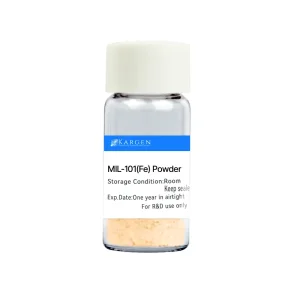



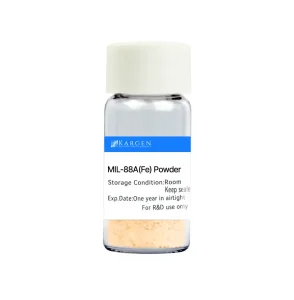
Technical Architecture: Thin-Film MOF Engineering & Synthesis Pathways
A rigorous examination of molecular sieving mechanics, crystallographic orientation control, and substrate-bound thin-film deposition techniques.
Fabricating high-performance MOF films (Metal-Organic Framework Membranes) requires controlling growth at the molecular interface. Liquid-Phase Epitaxy (LPE) layer-by-layer growth enables atomic precision over surface-anchored MOFs (SURMOFs). By alternately exposing functionalized substrates (such as alumina, polymeric hollow fibers, or porous stainless steel) to metal node solutions and organic linkers, pin-hole-free film layers with crystallographically aligned channels are achieved.
Additionally, interfacial polymerization (IP) allows rapid, continuous creation of ultra-thin selective layers (50–200 nm). By confining the synthesis reaction to an immiscible liquid-liquid or liquid-gas interface, MOF nanoparticles self-assemble into rigid, defect-free molecular sieving barriers capable of separating light hydrocarbon mixtures with unmatched selectivity.
The transport kinetics of molecules through a thin-film MOF layer depend heavily on grain boundary density and pore alignment. Unoriented polycrystalline MOF membranes suffer from intercrystalline defects (non-selective inter-grain pathways) that destroy separation performance.
Our advanced MOF Film Service incorporates seed-assisted secondary growth and structure-directing agents (SDAs) to enforce out-of-plane preferential orientation (e.g., [100] or [111] alignment in ZIF-8 and HKUST-1 membranes). This structural control aligns the intracrystalline sub-nanometer pores perpendicular to the substrate, accelerating flux by up to 300% while strictly discriminating molecules based on kinetic diameter differences as subtle as 0.02 nm.
Unlike conventional organic polymer membranes which suffer from the trade-off between permeability and selectivity (the Robeson Upper Bound), supported MOF films provide permanent ultra-high porosity (BET surface areas exceeding 1,500–4,000 m²/g) combined with chemical robustness. This enables long-term continuous operation under aggressive thermal (up to 400°C) and corrosive solvent environments.
Global Industrial Landscape & Commercial Procurement Trends
How multinational engineering firms and clean-energy enterprises are scaling thin-film MOF technologies for critical gas and liquid separations.
Global decarbonization mandates require highly durable carbon capture membranes. Hydrothermally stable MOF films (such as KAUST-7, Al-FUM, and ZIF-8 derivatives) yield CO₂/N₂ selectivities exceeding 50 with high permeance under humid flue gas streams, drastically lowering energy costs relative to traditional amine washing systems.
Microelectronics manufacturing demands sub-ppm purity levels for electronic-grade specialty gases (Ar, N₂, H₂, NF₃). MOF films integrated into micro-purifier cartridges remove trace moisture, oxygen, and corrosive volatile contaminants down to parts-per-trillion (ppt) threshold levels.
Next-generation lithium-metal and solid-state batteries deploy ultrathin MOF film coatings on ceramic separators. The ordered sub-nanometer channels homogenize lithium-ion flux, effectively suppressing lithium dendrite growth and extending battery cycle life by over 200%.
| Membrane Technology Class | Pore Size Uniformity | Thermal Limits (°C) | CO₂/N₂ Selectivity | Solvent Resistance | Scalability & Cost Metric |
|---|---|---|---|---|---|
| Supported MOF Thin Film (ZIF-8 / KAUST-7) | Sub-nanometer crystalline (<0.05 nm dev) | 350°C – 450°C | 45 – 90 | Exceptional (Aromatic & Polar Solvents) | High Efficiency (China Scalable Sol-Gel R2R) |
| Zeolite Membranes (NaA / MFI) | High Crystalline Uniformity | >500°C | 30 – 60 | High (Brittle under thermal cycles) | Extremely High Cost / Low Yield |
| Polymeric Membranes (Polyimide/Polysulfone) | Broad Amorphous Distribution | <150°C | 15 – 25 | Poor (Prone to swelling & plasticization) | Low Initial Cost / Frequent Replacement |
| Graphene Oxide / MXene Laminates | Interlayer Spacing Dependent | 200°C – 300°C | 20 – 40 | Moderate (Degrades in Aqueous Media) | Emerging Commercial Scale |
China Factory Efficiency & Global Export Supply Chain Advantage
Why leading global enterprises partner with premier Chinese exporters for scalable MOF chemical synthesis and high-yield thin-film membrane production.
Fabricating MOF films at commercial scale requires mass access to specialized organic linkers (such as 2-methylimidazole, trimesic acid, terephthalic acid, and iron/aluminum clusters) and high-purity metal precursors. China’s comprehensive chemical engineering ecosystem allows direct integration between precursor manufacturing and film processing facilities.
By eliminating cross-border raw material transport bottlenecks, our facilities achieve rapid batch turnarounds and guarantee consistent chemical purity (>99.5%), directly reducing input costs by 40–60% compared to Western pilot-scale operations.
Transitioning from benchtop hydrothermal batch synthesis to continuous industrial production is the core strength of Chinese manufacturing engineering. Our state-of-the-art facilities utilize continuous Roll-to-Roll (R2R) coating, slot-die deposition, and automated spray-assisted solvothermal units for flexible substrate films.
Every square meter of manufactured MOF film undergoes rigorous inline digital inspection—including grazing-incidence X-ray diffraction (GIXRD) crystalline validation, automated helium leak detection, and high-resolution SEM grain cross-section analysis—ensuring zero pinhole defects prior to export.
Localized Application Scenarios & Industrial Implementation
Deep-dive case studies showcasing how our MOF film exporter service solves complex separation challenges across key global sectors.
Separating C₂H₄/C₂H₆ and C₃H₆/C₃H₈ traditionally requires energy-intensive cryogenic distillation columns. Supported ZIF-8 and ZIF-67 thin films feature pore apertures of ~0.34 nm, allowing linear olefin molecules to pass rapidly while selectively sieving out slightly larger paraffin molecules. Replacing cryo-columns with MOF membrane cascades reduces operational energy consumption by up to 75%.
Pharmaceutical and fine-chemical synthesis processes generate vast solvent waste streams. Solvent-resistant MOF membranes (such as MIL-101(Cr) and Zr-based UiO-66 thin films) offer fixed pore sizes that withstand polar solvents (DMF, NMP, THF, acetone) without pore collapse, enabling continuous cold solvent recovery and active pharmaceutical ingredient (API) concentration.
Using hydrothermally stable Aluminum Fumarate (Al-FUM) and MIL-100 MOF composite films in desiccant wheel modules allows rapid water adsorption from low-humidity desert air (<30% RH). Thermal desorption using low-grade industrial waste heat (<80°C) produces clean potable water with minimal energy footprint.
Global Procurement, Quality Standards & Export Protocols
Comprehensive guidelines for technical buyers, plant engineers, and supply chain managers evaluating MOF suppliers.
Every commercial export shipment undergoes strict analytical qualification. We provide comprehensive analytical reports accompanying each lot, including:
- Powder X-Ray Diffraction (PXRD): Verification of phase purity and crystal structure alignment against theoretical patterns.
- BET Surface Area Analysis: Nitrogen/Argon physisorption isotherms validating micro-porosity volume.
- Scanning Electron Microscopy (SEM): Top-down and cross-sectional film thickness and grain boundary analysis.
- Thermogravimetric Analysis (TGA): Thermal breakdown threshold and guest molecule removal profiles.
Thin-film MOFs and high-surface-area precursor powders are highly sensitive to ambient moisture, atmospheric CO₂, and volatile contaminants during transit. Our export products are packaged in double-sealed argon-purged aluminum foil barrier bags or specialized vacuum-sealed stainless steel containers.
We maintain certified compliance with international dangerous goods shipping regulations (UN Class standards for metal salts and organometallics where applicable), ensuring seamless customs clearance and safe delivery to North America, Europe, Asia-Pacific, and the Middle East.
Emerging Paradigms in Next-Generation MOF Thin-Film Architecture
Anticipating the technological shifts that will define the next decade of advanced nanostructured separation materials.
The integration of MOF thin film crystals with two-dimensional building blocks—such as MXenes, Graphene Oxide (GO), and Covalent Organic Frameworks (COFs)—is opening unprecedented separation capabilities. These hybrid thin-film architectures leverage the structural rigidity of MOF cages alongside the rapid water-transport nanochannels of 2D sheets, yielding high flux and high selectivity for desupercharging desalination and gas separation processes.
Leveraging high-throughput density functional theory (DFT) and machine learning algorithms allows our R&D teams to screen millions of hypothetical MOF structures in silico. By predicting structural stability, pore landscape suitability, and binding affinities prior to wet-lab synthesis, custom MOF film formulations can be tailored for specific industrial target gas molecules in record timeframes.
Technical FAQ: Frequently Asked Questions by Procurement & R&D Teams
In-depth answers from our Senior Material Engineers regarding MOF film customization, substrate compatibility, scaling, and sample requests.
Primary MOF Film & Powder Portfolio (Part II)
Explore our secondary lineup of specialized Metal-Organic Framework materials for gas separation, catalysis, CO₂ selectivity, and high-surface-area industrial applications.



