
Premier MOF & Adsorbent Materials Portfolio
Engineered framework structures optimized for noble gas separation, carbon capture, and ultra-high surface area industrial catalytic support.







Executive White Paper: Next-Generation Noble Gas Ecosystem
A comprehensive analysis of global noble gas supply dynamics, solid-state physisorption breakthroughs, and advanced MOF engineering.
Automated Quality Control
Integrated Powder X-ray Diffraction (PXRD), BET surface area analyzers, and TGA instruments record automated digital quality metrics for every production lot to guarantee structural purity.
Mechanochemical Scale-Up
Solvent-free and low-solvent ball-milling synthesis pathways reduce raw material overhead by 40%, yielding commercial-grade MOF powders with minimal environmental impact.
Redundant Supply Logistics
Integrated supply networks across Zhuhai and Guangdong strategic port hubs ensure expedited international freight, full ISO compliance, and seamless OEM/ODM integration.
| Adsorbent Class | Target Noble Gas Pair | BET Surface Area (m²/g) | Xe/Kr Selectivity Factor | Regeneration Temp (°C) | Key Operational Advantage |
|---|---|---|---|---|---|
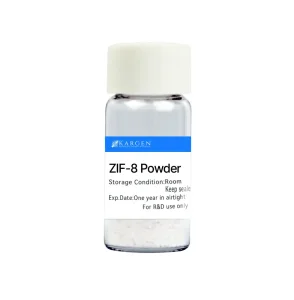
| ZIF-8 (Zeolitic Imidazolate) | Kr / Ne / Ar | 1,300 - 1,600 | 3.2 - 4.5 | 80 - 100 | Hydrophobic, high thermal stability in humid gas streams |
| MOF-74(Mg / Ni) | Xe / Kr | 1,200 - 1,500 | 7.8 - 9.2 | 110 - 130 | Open metal sites create polarizability traps for Xe |
| MIL-100(Fe / Cr) | Ar / N₂ / O₂ | 1,800 - 2,200 | 2.8 - 3.6 | 90 - 120 | Low-cost iron nodes, scalable for industrial air treatment |
| Activated Charcoal (Benchmark) | Xe / Kr | 800 - 1,100 | 1.8 - 2.2 | 150 - 200 | Legacy standard, limited pore size tunability |
| Zeolite 5A / 13X | Kr / Xe | 400 - 600 | 2.5 - 3.1 | 250 - 300 | High energy consumption during thermal regeneration |
Localized Application Scenarios & Global Use Cases
From semiconductor lithography cleanrooms to aerospace satellite integration facilities, explore how engineered noble gas sorbents drive performance.
Semiconductor Laser Gas Recovery
DUV excimer lasers rely on high-purity Neon-Krypton-Fluorine gas mixtures. MOF-packed adsorption beds selectively scrub halides and recover 98%+ of rare Neon/Krypton for on-site re-blending, drastically lowering operational FAB costs.
Aerospace Hall Thruster Propulsion
Electric propulsion systems for deep-space satellites demand 6N ultra-pure Xenon gas. Solid-state MOF storage cells enable lower-pressure, high-density Xenon containment compared to heavy high-pressure gas cylinders.
Nuclear Waste Off-Gas Treatment
Nuclear fuel reprocessing releases volatile radioactive isotopes, including Krypton-85. Customized metal-organic frameworks selectively capture Kr-85 from radioactive off-gas streams at room temperature with high radiation stability.
Medical Imaging & Anaesthesia
Xenon serves as a neuroprotective anesthetic and hyperpolarized MRI imaging agent. Efficient MOF-based extraction modules allow regional hospital networks to reclaim and purify exhaled Xenon, making clinical adoption financially viable.
Architectural Insulated Glass Filling
High-efficiency double and triple-pane windows utilize Argon and Krypton gas fillings to reduce thermal conductivity. MOF filter cartridges purify bulk Argon/Krypton supply to prevent window fogging and seal degradation.
Custom OEM/ODM Framework Synthesis
Collaborating with academic research labs and industrial R&D units to tune pore diameters, surface functional groups, and pellet geometry (pellets, extrudates, monoliths) for tailored gas separation tasks.
Frequently Asked Questions (FAQ)
Expert answers regarding noble gas procurement, technical specifications, MOF adsorption mechanics, and supplier qualification.
How do Metal-Organic Frameworks (MOFs) achieve noble gas separation at ambient temperature?
MOFs achieve noble gas separation through a combination of thermodynamic adsorption selectivity and kinetic pore-sieving mechanisms. Because noble gases possess spherical electron clouds with varying polarizabilities (Xenon > Krypton > Argon > Neon > Helium), MOFs engineered with open metal sites (such as Mg²⁺ or Ni²⁺ in MOF-74) induce strong dipoles in heavier, more polarizable gases like Xenon. This preferential binding allows Xenon to be adsorbed while lighter gases pass through uninhibited, eliminating the need for energy-intensive sub-zero cryogenic cooling.
What purity grades are achievable using MOF-based noble gas purification systems?
When integrated into multi-stage Pressure Swing Adsorption (PSA) or Temperature Swing Adsorption (TSA) units, our MOF sorbents can elevate crude gas streams to ultra-high purity 6N (99.9999%) standards. This level of purity complies fully with SEMI C3 standards required for semiconductor lithography, excimer laser gas mixtures, and aerospace thruster propellant specifications.
How does China’s manufacturing base ensure price stability and supply continuity?
Through ton-scale automated continuous solvothermal synthesis, localized raw material sourcing, and efficient mechanochemical processing, Chinese facilities lower MOF production costs by up to 50% compared to Western pilot labs. Furthermore, comprehensive inventory reserves, redundant logistics pipelines, and direct export capabilities protect international buyers from regional supply shocks and price spikes.
What product forms are available for industrial integration (powder vs. shaped pellets)?
We supply materials in versatile physical forms tailored to client engineering needs: ultra-fine dry powders (for slurry coating or research applications), engineered spherical beads, extruded pellets (1mm to 3mm for packed-bed columns), and monolithic structured foams designed for low-pressure-drop gas flow systems.
Can custom MOF formulations be developed under OEM/ODM non-disclosure agreements?
Yes. Guided by our doctoral R&D team and ISO-certified manufacturing protocols, we collaborate under strict non-disclosure agreements (NDAs) to engineer proprietary framework geometries, optimize pore sizes, and scale customized MOF compositions from gram-scale pilot testing to multi-ton commercial production.
What evaluation sample protocols are offered to prospective B2B procurement teams?
Qualified enterprise buyers and research institutions can request 1–5 gram evaluation sample kits accompanied by full Certificate of Analysis (CoA) documentation, PXRD diffractograms, and N₂/Ar adsorption isotherm data. Contact our application engineering team to specify your target gas separation pair and operating conditions.
Advanced Gas Adsorption & Catalytic MOF Grades
Explore specialized framework configurations formulated for high selective adsorption capacity, liquid-phase separation, and gas purification.




Partner with a Leading Noble Gas & MOF Supplier
Request comprehensive technical dossiers, schedule consultations with our doctoral engineering team, or submit evaluation sample requests today.