High-Performance MOF Materials for Water Splitting
Engineered for low overpotential, high turnover frequency (TOF), and exceptional hydrothermal stability in alkaline and acidic electrolyzers.
Industrial Status & Commercial Landscape of Water Splitting Hydrogen Production
Transitioning from fossil-fuel derived Grey Hydrogen to clean Green Hydrogen via water electrolysis at multi-gigawatt scale.
The global push toward net-zero carbon emissions has positioned green hydrogen—produced via water splitting powered by renewable energy sources—as the cornerstone of future decarbonization strategies. Industrial energy sectors, heavy metallurgy, chemical synthesis, and long-haul transportation are undergoing a radical shift away from Steam Methane Reforming (SMR). Commercial water splitting electrolyzers operate primarily across four core technological routes: Alkaline Water Electrolysis (ALK), Proton Exchange Membrane (PEM), Anion Exchange Membrane (AEM), and Solid Oxide Electrolyzer Cells (SOEC).
However, the economic viability of large-scale green hydrogen production hinges on overcoming significant thermodynamic overpotentials during the Hydrogen Evolution Reaction (HER) at the cathode and the sluggish 4-electron transfer Oxygen Evolution Reaction (OER) at the anode. Conventional systems rely heavily on scarce, high-cost noble metals such as Platinum (Pt) and Iridium Oxide (IrO₂). As global gigawatt-scale projects multiply, sourcing high-efficiency, durable, non-precious or ultra-low-loading noble metal electrocatalysts has become an imperative requirement for equipment manufacturers and engineering buyers worldwide.
LCOH Cost Reduction Targets
Global targets aim to drop the Levelized Cost of Hydrogen (LCOH) below $1.50/kg by 2030, demanding catalyst overpotentials below 200 mV at high current densities.
AEM & PEM Catalyst Innovation
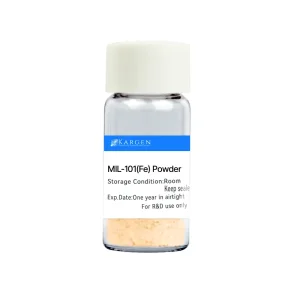
Advanced Metal-Organic Frameworks (MOFs) like MIL-101(Fe), ZIF-67, and derivatives are rapidly establishing dominance as highly porous, tunable precursor templates.
Structural Mass Transport
Porous MOF structures offer surface areas exceeding 1,500–3,000 m²/g, maximizing active metal site exposure and expediting micro-bubble desorption.
| Electrolyzer Technology | Operating Temp (°C) | Current State-of-the-Art Catalysts | MOF / Advanced Material Role | Commercial Scalability |
|---|---|---|---|---|
| Alkaline (ALK) | 60 – 90 °C | Raney Nickel, Ni-Fe Layered Double Hydroxides | Fe/Co-MOF precursors for ultra-stable OER anodes | High (MW to GW scale) |
| PEM Electrolysis | 50 – 80 °C | Pt/C (HER), IrO₂ / RuO₂ (OER) | MOF-templated Single-Atom Catalysts (SACs) to reduce Ir loading by >70% | Rapidly Expanding |
| AEM Electrolysis | 40 – 60 °C | Transition Metal Oxides, Ni-Fe Phosphides | ZIF-8 / ZIF-67 derived porous carbon networks for noble-metal-free HER/OER | Emerging Commercial Standard |
| SOEC (Solid Oxide) | 600 – 850 °C | LSM-YSZ, Perovskites | Nanostructured ceramic framework coatings for thermal expansion mitigation | Industrial Pilot Phase |
China's Factory Efficiency & Ton-Scale Supply Advantages
How Guangdong Advanced Carbon Materials Co., Ltd. (KARGEN) bridges laboratory innovations to global industrial manufacturing.
China accounts for over 60% of global electrolyzer manufacturing capacity, backed by a complete upstream chemical precursor ecosystem, robust precision engineering infrastructure, and unmatched cost-scaling dynamics. As pioneer suppliers of Metal-Organic Frameworks and nano-catalyst supports in China, KARGEN (Guangdong Advanced Carbon Materials Co., Ltd.) operates a state-of-the-art 10,000 m² R&D and manufacturing facility in Zhuhai. Founded by returning overseas PhD scholars from the US, Germany, and Sweden, KARGEN represents the apex of Chinese chemical engineering precision combined with global quality management standards.
The Scalability Breakthrough: Mechanochemical & Solvent-Free Synthesis
Traditional MOF production suffers from high solvent consumption (e.g., DMF, Solvothermal processes) and expensive organic linkers, limiting output to kilogram lots. KARGEN pioneered continuous mechanochemical and low-solvent green hydrothermal scaling routes in China. This enables ton-scale manufacturing of high-purity ZIF-8, MIL-101(Fe), HKUST-1, and Al-FUM powders with 40% to 60% lower production costs than Western counterparts, without compromising crystal purity, BET surface area, or batch-to-batch consistency.
Why Global Buyers Source Water Splitting Catalysts & MOFs from KARGEN:
- Integrated Linker & Metal Node Purchasing: Direct integration with regional petrochemical ligand producers ensures uninterrupted access to terephthalic acid, trimesic acid, 2-methylimidazole, and organic salts.
- Rigorous Quality Assurance (QA/QC): Every shipment is backed by lot-specific X-ray Diffraction (XRD), Brunauer-Emmett-Teller (BET) surface area metrics, Scanning Electron Microscopy (SEM), and Inductively Coupled Plasma Optical Emission Spectroscopy (ICP-OES) documentation.
- Custom Formulations (OEM/ODM): Tailored particle size tuning (sub-micron to millimeter spherical granulates), specialized metal node substitution (Fe, Co, Ni, Cu, Cr, Al), and liquid dispersions formulated for direct slurry coating onto porous transport layers (PTL) or nickel foam anodes.
Localized Application Scenarios in Hydrogen Infrastructure
From mega-watt green hydrogen hubs to specialized industrial gas production units.
1. Gigawatt-Scale Desert Solar-to-Hydrogen Parks
Deployed in high-solar irradiance regions (Middle East, North Africa, Australia). Materials like Al-FUM and hydrophobic ZIF-8 handle extreme thermal swings while serving dual roles in atmospheric water harvesting (AWH) and electrolyzer gas-water separation assemblies.
2. Offshore Wind Direct Seawater Electrolysis
Offshore floating platforms face severe chloride-ion corrosion. MOF-derived heteroatom-doped carbon layers protect underlying catalytic metals, suppressing chlorine evolution reaction (CER) while boosting selective oxygen evolution reaction (OER).
3. On-Site Green Ammonia & Refinement Plants
Integrated chemical complexes utilize HKUST-1 and MIL-53(Al) for downstream hydrogen purification, moisture removal, and trace impurity scrubbers prior to high-pressure Haber-Bosch ammonia synthesis.
Future Trends & Technological Roadmap (2026 – 2035)
Key scientific vectors driving the next decade of water splitting catalyst commercialization.
The global hydrogen economy is entering an era of unprecedented refinement. Simply reducing catalyst price is no longer sufficient; multi-thousand-hour operational endurance under dynamic power input (matching wind and solar fluctuations) has become the supreme benchmark. Leading technical trends include:
1. MOF-Templated Single-Atom Catalysts (SACs)
By using isolated metal nodes within frameworks like MIL-101(Fe) or NH2-MIL-101(Fe), researchers trap individual atomic centers (Fe, Co, Ni, Ru, Ir) on conductive porous carbon matrices upon controlled pyrolysis. This unlocks nearly 100% atomic utilization, dramatically lowering overpotential while reducing noble metal requirements by orders of magnitude.
2. Dual-Functional Bifunctional Electrocatalysts
Engineering single materials capable of efficiently catalyzing both HER and OER in the same alkaline or AEM electrolyte eliminates complex multi-layer electrode fabrication processes, significantly streamlining stack assembly for electrolyzer manufacturers.
3. Direct Seawater Splitting without Pre-Desalination
Designing catalysts with selective permselective MOF membranes (such as KAUST-7 or MOF-303 derivatives) that block harmful chloride ions (Cl⁻) while allowing water molecules to pass to active catalytic sites. This eliminates expensive reverse osmosis (RO) pre-treatment units in coastal hydrogen hubs.
Global Enterprise Procurement & Qualification Guidelines
How technical buying teams validate and source ton-scale water splitting catalysts from overseas suppliers.
Procuring advanced catalytic materials and Metal-Organic Frameworks for commercial electrolyzer manufacturing requires rigorous supplier auditing. Enterprise buyers must evaluate critical parameters beyond initial cost per kilogram:
Step 1: Gram-Level R&D Screening
Request 1–5 g test samples for laboratory electrocatalytic evaluation (LSV polarization curves, EIS impedance spectroscopy, chronopotentiometry stability tests for 100+ hours).
Step 2: Pilot Scale-Up & Slurry Coating
Validate dispersion behavior, binder compatibility (Nafion, PTFE, ionomers), and slurry viscosity for scalable slot-die or spray-coating onto porous transport layers (PTLs).
Step 3: Factory Audit & Ton-Scale Contract
Audit ISO9001/ISO14001 compliance, raw material safety data sheets (MSDS/SDS), batch-to-batch XRD stability, and export logistics clearance capabilities.
Frequently Asked Questions (FAQ) for Procurement & Engineering Teams
Clear, authoritative technical answers to common queries regarding MOF sourcing, water splitting efficiency, and custom export options.
What role do MOFs play in hydrogen production from water splitting?
Metal-Organic Frameworks (MOFs) serve as exceptionally versatile electrocatalysts and sacrificial templates. Due to their ultra-high specific surface area, tunable pore network, and precisely defined metal nodes (e.g., Fe, Co, Ni, Cu), MOFs expose a vast density of active sites for HER and OER. They lower activation energy overpotentials, facilitate rapid bubble release, and reduce dependence on expensive noble metals like Ir and Pt.
Can KARGEN provide free evaluation samples for enterprise clients?
Yes. Qualified B2B application development projects and electrolyzer OEMs can receive 1–5 grams of free evaluation samples (such as MIL-101(Fe), ZIF-67, ZIF-8, or HKUST-1). Shipping and handling costs are paid by the recipient. Contact our engineering team with your project details to qualify.
How does KARGEN ensure batch-to-batch consistency for bulk ton-scale orders?
KARGEN utilizes automated continuous production lines equipped with digital process controls. Every manufacturing batch undergoes full quality verification, including X-ray Powder Diffraction (XRD) for crystal integrity, nitrogen adsorption BET for surface area verification, particle size distribution analysis (PSD), and ICP-OES for elemental stoichiometry. Certificates of Analysis (CoA) accompany every container.
What forms are your MOF and catalyst products available in?
Standard grades are supplied as fine dry powders, microporous granules, or liquid dispersions in water/ethanol/solvents tailored for direct electrode ink preparation. We also support custom OEM/ODM development for specific particle size requirements and composite substrates.
What are the lead times for international chemical shipments?
Sample orders (1–500g) typically ship via express air courier within 3 to 5 business days. Commercial orders (multi-kilogram to ton scale) are dispatched within 2 to 4 weeks depending on custom synthesis specifications and sea/air freight documentation.
How quickly does KARGEN respond to technical inquiries?
Our sales and PhD engineering team guarantees a formal email reply within one business day across all global time zones. Direct engineering consultations can be scheduled upon request.
Explore Additional Industrial MOF & Nanomaterial Grades
High-purity frameworks for catalysis, gas separation, carbon capture, and clean energy storage applications.