

Featured Frameworks Served to Greater Tokyo
High-Purity Core Metal-Organic Framework Powders
Engineered for high BET surface area, exceptional thermal stability, and immediate integration into industrial applications in Tokyo and worldwide.

Best Al-FUM Powder Metal Organic Frameworks (MOFs) Supplier, Exporter Serving Tokyo Industrial Sector
View Specifications
Best HKUST-1 Powder Metal Organic Frameworks (MOFs) Service, Exporter Serving Tokyo Clean-Tech Fabs
View Specifications
High-Quality MIL-53(Al) Powder Metal Organic Frameworks (MOFs) Supplier, Exporters Serving Tokyo Market
View Specifications10,000 m²
R&D & Ton-Scale Production Base
2,000+
m²/g Specific Surface Area
40+
Proprietary MOF Syntheses
24 Hours
Express Response to Tokyo Requests
Industry Whitepaper Analysis
Tokyo’s Advanced Materials Ecosystem & The MOF Paradigm Shift
Unlocking unprecedented volumetric adsorption and molecular separation efficiencies for Greater Tokyo's manufacturing and clean-energy sectors.
1. Executive Summary & Market Context
As the Greater Tokyo Metropolitan Area accelerates its transition toward the “Zero Emission Tokyo Strategy 2050”, industrial enterprises, semiconductor fabrication units, automotive R&D hubs (across Kanagawa, Saitama, and Chiba corridors), and HVAC engineering innovators are demanding next-generation porous materials. Traditional adsorbents—such as activated carbon, standard zeolites, and silica gels—are rapidly reaching their thermodynamic performance limits. Their random pore networks, restricted specific surface areas (rarely exceeding 1,000 m²/g), and high regeneration energy burdens hinder significant leaps in process efficiency.
Metal-Organic Frameworks (MOFs) represent a pivotal technological leap forward. Composed of metal node clusters coordinated with organic linkers, MOFs create crystalline, three-dimensional porous networks characterized by unparalleled surface areas (up to 2,000–6,000 m²/g), ultra-high porosity, tunable pore diameters (0.3 nm to 3.0 nm), and custom chemical reactivity. As a premier Metal Organic Frameworks Exporter serving Tokyo, KARGEN (Guangdong Advanced Carbon Materials Co., Ltd.) delivers reliable, ton-scale commercial MOF powders and dispersions directly engineered to address Japan's stringent industrial standards.
Key Strategic Takeaway for Tokyo Procurement Directors: By switching from conventional zeolites to tailored MOFs (such as mechanochemically synthesized ZIF-8 or hydrothermally stable Al-FUM), industrial operators in Tokyo can reduce sorbent bed footprints by up to 65% while lowering thermal regeneration energy consumption by 35–50%.
2. Structural Chemistry & Engineering Classification of Industrial MOFs
Understanding the molecular dynamics and framework behaviors is essential for selecting the optimal material grade for commercial deployment. KARGEN categorizes its export-ready portfolio into four core crystallographic families:
ZIFs (Zeolitic Imidazolate Frameworks)
Zinc or Cobalt nodes connected via imidazolate linkers matching sodalite (SOD) topologies. Highly hydrophobic with exceptional thermal stability (up to 500°C) and chemical robustness in alkaline environments. Flagship grade: ZIF-8.
MILs (Materials Institute Lavoisier)
Trivalent metal carboxylates (Al³⁺, Fe³⁺, Cr³⁺) engineered for high hydrothermal endurance. Famous for their "breathing" lattice behavior under gas or moisture pressure. Core grades: MIL-53(Al), MIL-100(Fe), MIL-101(Cr).
Copper & Carboxylate Frameworks
Open metal site architectures featuring coordinatively unsaturated metal centers. Provides high Lewis-acidity for selective gas binding ($CO_2, NH_3, H_2S$). Flagship grade: HKUST-1 (Cu-BTC).
Comparative Technical Specification Matrix
The following performance benchmark highlights the technical metrics verified across KARGEN’s digital batch quality assurance labs:
| MOF Family | Metal Node / Organic Linker | BET Surface Area (m²/g) | Pore Volume (cm³/g) | Thermal Stability (°C) | Primary Industrial Vector in Tokyo |
|---|---|---|---|---|---|
| ZIF-8 (Mechanochemical) | Zn²⁺ / 2-Methylimidazole | 1,300 – 1,800 | 0.65 – 0.75 | > 450°C | Battery Separator Coatings & Carbon Capture |
| Al-FUM | Al³⁺ / Fumaric Acid | 1,000 – 1,300 | 0.45 – 0.55 | > 350°C | Atmospheric Water Harvesting & Low-Heat HVAC |
| HKUST-1 | Cu²⁺ / 1,3,5-Benzenetricarboxylate | 1,500 – 2,100 | 0.70 – 0.85 | > 250°C | Semiconductor Specialty Gas Scrubbing & $H_2$ Storage |
| MIL-53(Al) | Al³⁺ / 1,4-Benzenedicarboxylate | 1,100 – 1,500 | 0.50 – 0.60 | > 500°C | Industrial VOC Adsorption & Flue Gas Separation |
| MIL-101(Cr) | Cr³⁺ / Terephthalate | 2,800 – 3,600 | 1.30 – 1.60 | > 300°C | High-Capacity Gas Storage & Catalytic Support |
Localized Application Engineering
High-Impact MOF Application Scenarios Across Greater Tokyo
Deploying tailored pore architectures to solve complex operational challenges in Tokyo's core industrial sectors.
A. Next-Gen HVAC & Desiccant Cooling for Tokyo Commercial Real Estate
Tokyo's severe summer humidity forces commercial skyscrapers and high-density data centers in Otemachi and Roppongi to expend massive electrical loads on latent cooling. Conventional silica desiccant wheels require high desorption temperatures (120°C–150°C).
The MOF Solution: KARGEN’s Al-FUM (Aluminium Fumarate) features an ideal S-shaped water sorption isotherm with steep uptake at relative humidity (RH) between 20% and 40%. It desorbs fully at ultra-low waste-heat temperatures (60°C–75°C), cutting HVAC compressor energy usage by over 40%.
B. Sub-Nanometer Gas Purification for Kanagawa & Tokyo Semiconductor Fabs
The electronics and micro-display facilities operating across the Greater Tokyo Bay corridor require ultra-high purity gases ($NH_3, PH_3, AsH_3, N_2$). Trace moisture or volatile siloxane contaminants at parts-per-billion (ppb) levels destroy yield rates in advanced lithography.
The MOF Solution: Open-metal-site frameworks like HKUST-1 and custom KAUST-7 offer kinetic sieving and strong polar site interaction, selectively binding trace impurities while maintaining negligible pressure drops in gas delivery lines.
C. EV Lithium-Ion Battery Separators & Solid Electrolyte Coatings
Automotive tech centers near Tokyo are rapidly advancing solid-state and high-energy lithium batteries. Thermal runaway risks and lithium dendrite formation remain critical hurdles.
The MOF Solution: Nano-dispersed ZIF-8 coatings on polyolefin separators stabilize electrolyte ion channels, homogenize $Li^+$ flux, suppress dendrite growth, and trap dissolved transition metal ions, dramatically extending cycle life and safety margins.
Global Supply Chain Economics
The Chinese Factory Advantage: Why Tokyo Procurements Partner with KARGEN
Combining world-class R&D with ton-scale industrial manufacturing to deliver unbeatable cost-performance efficiency.
Industrial Scale vs. Lab-Scale Bottlenecks
Historically, Western MOF suppliers operated primarily at laboratory or small-pilot scales, resulting in prohibitive prices ($500–$2,000 per kilogram). This pricing model rendered MOF implementation economically unviable for large-scale carbon capture units or bulk HVAC desiccant wheels in Tokyo.
KARGEN was the first advanced materials manufacturer in China to achieve true ton-scale MOF production. By establishing a 10,000 m² integrated production base in Guangdong, KARGEN has solved the scaling equation through green solvent recycling, continuous mechanochemical reactive extrusion, and scalable hydrothermal reactors.
- 60%–70% Cost Reduction: Economies of scale and direct access to China's complete precursor supply chains allow us to offer commercial-grade pricing.
- Mechanochemical Innovation: Solvent-free or low-solvent mechanochemical synthesis for ZIF-8 guarantees high batch-to-batch consistency with minimal environmental footprint.
- Seamless Tokyo Logistics: Direct shipping routes from Southern China to Tokyo Port or air freight directly into Haneda/Narita ensure rapid door-to-door delivery within 3 to 7 business days.
KARGEN Quality Assurance Protocol
Every shipment dispatched to Tokyo is accompanied by full batch-specific analytical certificates (COA):
Tailored Engineering
End-to-End OEM/ODM Customization Framework for Tokyo Enterprises
From initial milligram molecular screening to multi-ton industrial plant integration.
Phase 1: Screening & 1–5g Samples
Provide us with your target gas vector, relative humidity requirements, or solvent environment. We supply qualified evaluation samples with full analytical characterization for your bench-top testing.
Phase 2: Form Factors & Granulation
Raw MOF powders can cause system pressure drops. We format MOFs into engineered granules, binder-free extrudates, honeycomb monolith coatings, or liquid dispersions optimized for your equipment.
Phase 3: Ton-Scale Commercial Supply
Upon pilot validation, recipes transition to our automated ton-scale reactors under strict ISO9001 and environmental management systems, ensuring reliable contract supply schedules.
Complete Product Portfolio
Advanced Industrial Metal-Organic Framework Powders Served to Tokyo
Explore our extended series of iron, chromium, and aluminum-based MOFs designed for environmental remediation, catalysis, and complex separation tasks.
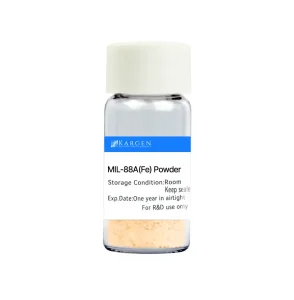
Best MIL-88A(Fe) Powder Metal Organic Frameworks (MOFs) Supplier, Exporters Serving Tokyo Industry
View Specifications
Best KAUST-7 Powder Metal Organic Frameworks (MOFs) Service, Exporter Serving Tokyo Gas Utilities
View Specifications
High-Quality MIL-100(Al) Powder Metal Organic Frameworks (MOFs) Suppliers, Exporters Serving Tokyo
View Specifications
High-Quality MIL-100(Cr) Powder Metal Organic Frameworks (MOFs) Exporters, Exporter Serving Tokyo Labs
View Specifications
Best MIL-100(Fe) Powder Metal Organic Frameworks (MOFs) Service, Exporters Serving Tokyo Bio-Tech
View Specifications
High-Quality MIL-101(Al) Powder Metal Organic Frameworks (MOFs) Service, Supplier Serving Tokyo
View Specifications
High-Quality MIL-101(Cr) Powder Metal Organic Frameworks (MOFs) Service, Exporters Serving Tokyo
View Specifications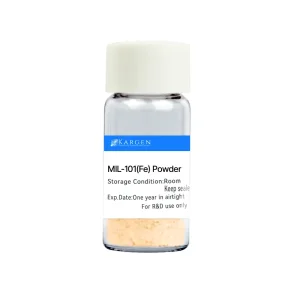
Best MIL-101(Fe) Powder Metal Organic Frameworks (MOFs) Supplier, Exporters Serving Tokyo Region
View Specifications
Technical FAQ
Frequently Asked Questions for Tokyo Procurement & R&D Teams
Clear, direct answers regarding MOF sourcing, logistics to Japan, custom synthesis, and quality validation.
How does KARGEN deliver MOF materials to enterprise buyers in Tokyo, Japan?
We maintain streamlined export protocols for all Japanese prefectures. Orders are shipped under strict moisture-sealed, nitrogen-purged packaging via air express (FedEx/DHL) for R&D lots (reaching Tokyo in 2–4 days) or sea freight (Guangdong/Shenzhen Port to Tokyo Port, typically 5–7 days transit time). We handle all export customs documentation, SDS, and REACH/Japanese Chemical Substances Control Law (CSCL) compliance filings.
Does KARGEN provide evaluation samples for industrial projects in Greater Tokyo?
Yes. Qualified enterprise R&D divisions and academic research teams can request 1g to 5g evaluation sample kits. Each sample comes complete with batch-specific Powder XRD spectra, BET surface area plots, and TGA curves. Please contact our application team using our inquiry form to outline your target specifications.
Why is mechanochemically synthesized ZIF-8 superior for industrial battery and capture applications?
Traditional solvothermal synthesis of ZIF-8 relies on vast quantities of organic solvents (such as DMF or methanol), creating environmental hazards and high production costs. KARGEN’s mechanochemical synthesis utilizes solvent-free high-energy ball milling/reactive extrusion, resulting in uncompromised crystallinity (BET surface area >1,400 m²/g), superior batch-to-batch repeatability, and a significantly lower carbon footprint.
Can KARGEN shape MOF powders into pellets, extrudates, or coatings for specialized equipment?
Absolutely. High-speed gas flows through loose MOF powders can cause fluidization and high pressure drops. KARGEN offers binder-free or low-binder shaping options, including 1mm–3mm spherical granules, cylindrical extrudates, MOF-coated ceramic honeycombs, and stable liquid dispersions for roll-to-roll separator coating lines.
How does Al-FUM compare to conventional Silica Gel in Tokyo HVAC desiccant wheels?
While silica gel exhibits linear adsorption and requires high regeneration temperatures (above 120°C), Al-FUM features a steep S-shaped water vapor adsorption curve, adsorbing up to 0.45 g of $H_2O$ per gram of dry sorbent at low relative humidity (RH 30%). Crucially, Al-FUM fully desorbs water vapor at 65°C–70°C, allowing HVAC systems to run on low-grade industrial waste heat or solar thermal inputs.
What is KARGEN’s typical order lead time and ton-scale capacity limit?
Standard off-the-shelf MOF powders (ZIF-8, Al-FUM, HKUST-1, MIL-53) in quantities up to 50 kg ship within 3 business days. For multi-ton production contracts, our 10,000 m² factory operates automated reactors with a lead time of 2 to 4 weeks per ton, supported by digital quality tracking at every stage.
Accelerate Your Advanced Material Innovation Serving Tokyo
Speak directly with KARGEN’s PhD application engineers to request custom technical datasheets, order evaluation samples, or schedule a bulk procurement quotation.
Send Inquiry Now