
Primary MOF Powders Supplied to Sydney & New South Wales
Engineered for immediate integration into Sydney’s energy, water harvesting, battery manufacturing, and carbon capture projects. High batch-to-batch consistency guaranteed.

Best ZIF-8 Powder Metal Organic Frameworks for Sydney Clean Energy Projects
Ultra-stable zinc imidazolate framework engineered via low-solvent mechanochemical synthesis. Features high thermal stability (>400°C) and hydrophobic micropores ideal for CO₂ capture, battery separator coatings, and membrane separations in New South Wales industrial facilities.
View Technical Specs
Best Al-FUM Powder Metal Organic Frameworks Supplier for Sydney HVAC
Hydrothermally robust aluminum fumarate MOF designed for low-temperature regeneration desiccant cooling and atmospheric water collection across Sydney's coastal and arid regional climates. High water vapor capacity with exceptional cycling durability.
View Technical Specs
Best HKUST-1 Powder Metal Organic Frameworks Service for Sydney Labs
Benchmark copper-benzene-1,3,5-tricarboxylate (Cu-BTC) framework featuring open coordination sites. Exceptional surface area (>1800 m²/g) optimized for gas purification, specialty methane/hydrogen storage, and catalysis research in Sydney R&D centers.
View Technical Specs
High-Quality MIL-53(Al) Powder MOF Exporters for Sydney Process Industries
Flexible aluminum terephthalate framework demonstrating unique "breathing" pore behavior upon gas adsorption. Tailor-made for selective volatile organic compound (VOC) capture, gas separation, and liquid phase separations in NSW process plants.
View Technical SpecsMetal Organic Frameworks in Sydney: Commercial & Industrial Imperatives
Evaluating how advanced nanoporous crystalline materials are reshaping New South Wales’ transition toward net-zero manufacturing, sustainable HVAC systems, and high-efficiency water management.
Driving Net-Zero Decarbonization across Greater Sydney & NSW
As Australia accelerates its commitment under the Net Zero Plan Stage 1: 2020-2030 and NSW targets a 70% emissions reduction by 2035, industries throughout Sydney, the Illawarra, and the Hunter region face urgent demands to adopt low-energy separation technologies. Traditional amine-based chemical scrubbing systems utilized in heavy manufacturing and power plants consume enormous thermal energy during solvent regeneration—often requiring upwards of 3.5 to 4.5 MJ/kg of captured CO₂.
Metal Organic Frameworks (MOFs)—engineered from metal nodes linked by organic ligands—offer tailored pore geometries and customized internal chemical environments that permit physical physisorption of target gas molecules. In Sydney’s commercial sector, MOFs provide a step-change reduction in regeneration energy (<2.0 MJ/kg CO₂), making decentralized point-source carbon capture and direct air capture (DAC) economically viable for regional infrastructure.
Sydney Market Reality: Replacing conventional zeolites and silica gels with high-capacity MOFs like ZIF-8 and Al-FUM reduces energy consumption in industrial air handling and carbon scrubbing units by up to 45% across Greater Sydney commercial real estate and manufacturing assets.
Commercial HVAC Retrofits in Sydney CBD
Sydney’s massive commercial tower footprint consumes significant electrical energy solely for latent cooling and moisture control. Integrating Al-FUM MOF coatings into desiccant wheels allows lower regeneration temperatures (60°C–75°C) leveraging waste heat or solar thermal energy, drastically cutting peak electrical loads.
Clean Energy & Hydrogen Infrastructure Hubs
With the NSW Government committing heavily to the Hunter and Illawarra Renewable Energy Zones (REZ), demand for solid-state gas storage media—such as HKUST-1 and custom MIL-series MOFs—has expanded rapidly for safe, low-pressure hydrogen and biomethane transportation into Sydney urban boundaries.
Global MOF Commercialization Dynamics & Growth Drivers
The global Metal Organic Framework market is transitioning rapidly from gram-scale academic synthesis to ton-scale industrial delivery across energy storage, semiconductor gas purification, and atmospheric water harvesting.
m²/g Average BET Surface Area of Commercial MOF Grades
Energy Reduction in MOF-based Gas & Moisture Separations
Annual Manufacturing Capacity from Our Central Facility
Proprietary MOF & Advanced Carbon Formulations
Shift from Benchtop Research to High-Volume Industrial Sourcing
For over two decades, MOFs were largely confined to academic laboratories due to high linker costs and complex solvothermal synthesis methods involving expensive organic solvents like DMF. Today, continuous mechanochemical manufacturing, green solvent recovery, and mass production of organic linkers (such as fumaric acid, 2-methylimidazole, and 1,3,5-benzenetricarboxylic acid) have reduced MOF production costs by orders of magnitude. This economic shift allows Sydney procurement teams to specify ton-scale MOF quantities for full-scale commercial deployment rather than pilot testing alone.
The Chinese Factory Efficiency Advantage for Sydney Procurement
How our Guangdong advanced manufacturing base delivers unprecedented cost efficiency, strict quality control, and rapid delivery timelines to Sydney B2B partners.
Ton-Scale Mechanochemical Lines
We operate automated solvent-free mechanochemical and continuous aqueous-phase reactors. By eliminating high volumes of toxic organic solvents, we cut production costs by up to 60% while dramatically improving environmental sustainability and batch purity.
Rigorous Characterization & QA
Every export batch to Australia undergoes rigorous automated Powder X-Ray Diffraction (PXRD), N₂/CO₂ BET surface area analysis, Thermogravimetric Analysis (TGA), and ICP-OES elemental analysis to guarantee exact crystallographic fidelity.
Integrated Greater Bay Area Logistics
Situated in Zhuhai, Guangdong, our direct access to major international shipping routes enables streamlined air freight to Sydney Airport (SYD) and expedited maritime container transit directly into Port Botany with full customs documentation.
Rapid Scale-Up & OEM/ODM Capability
Unlike boutique chemical vendors who resell lab samples at exorbitant per-gram pricing, our scientist-led R&D division (over 80% holding PhD or Master's degrees in chemical engineering) provides direct OEM/ODM customization. We tune particle size distribution (PSD from nanometer dispersions to millimeter extrudates), alter organic linkers, and functionalize metal nodes to match exact Sydney engineering specifications.
From initial gram-scale feasibility samples delivered within days, to pilot multi-kilogram validation, through to ton-scale commercial contracts, our factory structure guarantees linear scale-up without batch variance.
Quality Assurance Standard for Australian Imports:
- Batch-specific Certificate of Analysis (CoA) with PXRD spectra
- BET Surface Area validation report (77K Nitrogen Isotherm)
- Thermogravimetric decomposition curves for thermal limits
- Complete GHS-compliant Safety Data Sheets (SDS)
- AICIS / Australian Customs chemical compliance support
- Standard moisture-proof sealed aluminum foil & argon-purged packaging
Localized Engineering Deployments in Sydney & NSW
How Metal Organic Frameworks address critical regional engineering challenges in moisture management, green buildings, carbon capture, and clean tech research.
1. Atmospheric Water Harvesting in Arid NSW
Regional New South Wales and agricultural zones frequently encounter severe drought. Aluminum-based MOFs like Al-FUM harvest clean drinking water directly from air at relative humidity levels as low as 15-20%, utilizing ambient sunlight to drive desorption without electrical grid connection.
2. Green Building HVAC Efficiency in Sydney CBD
By integrating low-desorption temperature MOFs into commercial air-conditioning heat exchangers across Sydney CBD office towers, building engineers can strip latent humidity independently from sensible cooling, reducing total chiller energy consumption by 30-50%.
3. Point-Source Industrial Flue Gas Scrubbing
Manufacturing operations in Western Sydney and the nearby Port Kembla steel corridor utilize ZIF-8 and MIL-series framework beds for high-selectivity CO₂ capture from flue gas streams containing humidity and trace sulfur, drastically lowering compliance costs under Australian carbon frameworks.
4. Battery Separator Coatings & Solid Electrolytes
Sydney’s burgeoning energy storage research institutions (including labs at UNSW and the University of Sydney) utilize ZIF-8 nanopowder dispersions as functional coatings on lithium-ion battery separators to regulate ion flux, inhibit lithium dendrite growth, and improve cell thermal safety.
5. Semiconductor Specialty Gas Scrubbing
Advanced electronics component fabricators in New South Wales use HKUST-1 open-metal copper sites for high-efficiency capture and purification of hazardous gases (such as phosphine, arsine, and ammonia), protecting cleanroom operations.
6. Wastewater VOC & Heavy Metal Adsorption
Industrial water recycling programs in Greater Sydney leverage iron-based, non-toxic MOFs like MIL-88A(Fe) and MIL-100(Fe) to selectively adsorb organic pollutants, pharmaceuticals, and toxic heavy metals from industrial effluent streams.
Structure-Property Performance Matrix of Export MOFs
Detailed physical parameters for Sydney process engineers and materials researchers evaluating pore geometry, surface area, thermal limits, and target application suitability.
| MOF Framework | Metal Center / Linker | BET Surface Area (m²/g) | Pore Volume (cm³/g) | Thermal Stability (°C) | Primary Sydney Application | Hydrothermal Rating |
|---|---|---|---|---|---|---|
| ZIF-8 | Zinc / 2-Methylimidazole | 1,300 – 1,800 | 0.65 – 0.75 | 420°C | CO₂ Capture, Li-battery separator coating | High (pH 3–14) |
| Al-FUM | Aluminum / Fumaric Acid | 1,000 – 1,300 | 0.45 – 0.55 | 350°C | Atmospheric Water Harvesting, Desiccant HVAC | Excellent |
| HKUST-1 | Copper / Trimesic Acid (BTC) | 1,500 – 2,100 | 0.70 – 0.85 | 250°C | Specialty Gas Storage & Purification | Moderate (Dry gas) |
| MIL-53(Al) | Aluminum / Terephthalic Acid | 1,100 – 1,500 | 0.50 – 0.60 | 500°C | VOC Adsorption, "Breathing" Gas Separation | Excellent |
| MIL-88A(Fe) | Iron / Fumaric Acid | 600 – 900 | 0.35 – 0.45 | 200°C | Wastewater Remediation, Catalytic Oxidation | Good (Aqueous) |
| MIL-100(Fe) | Iron / Trimesic Acid | 1,800 – 2,400 | 0.90 – 1.10 | 300°C | Biomedical Carrier, Water Purification | High (Biocompatible) |
| MIL-101(Cr) | Chromium / Terephthalic Acid | 2,800 – 3,600 | 1.30 – 1.65 | 380°C | Ultra-high capacity gas storage, catalysis | Outstanding |
Future Horizons: The Next Decade of MOF Innovation in Australia
The global MOF sector is rapidly evolving beyond pure powder supply toward structured macroscopic forms: shaped extrudates, monoliths, electrospun nanofiber membranes, and thin-film coatings. As Australian researchers at Sydney universities pioneer next-generation energy applications, our manufacturing facility is leading the charge in continuous shaping technologies.
Key technological vectors transforming the Sydney market include:
- Mixed-Matrix Membranes (MMMs): Incorporating sub-micron ZIF-8 and MIL-53 particles into polymeric matrix membranes to break the Robeson upper bound in natural gas sweetening and biogas purification.
- Direct Air Capture (DAC) Contactors: Synthesizing amine-functionalized MOFs monolithically to capture atmospheric CO₂ with unprecedented energy efficiency.
- Desiccant Coatings on Heat Exchangers: Direct binder-free crystallization of Al-FUM onto aluminum heat exchangers for ultimate thermal transfer dynamics.
Why Partner with KARGEN for Sydney Supply?
✓ Direct Factory Pricing: Eliminate intermediary markup by dealing directly with our Zhuhai manufacturing plant.
✓ 1–5 g Free Sample Program: Qualified Sydney commercial R&D teams receive evaluation samples promptly.
✓ 24-Hour Business Response: Guaranteed 1-day response time across all Australian time zones (AEST/AEDT).
✓ Custom Shaping & Formulation: Powders, liquid dispersions, pellets, and granules available on demand.
Accelerate Your Sydney MOF Project Today
Request technical datasheets, request free 1-5g evaluation samples, or consult directly with our senior materials engineering team.
Extended Portfolio of High-Purity Metal Organic Frameworks
Explore our complete catalog of specialized MIL-series and KAUST frameworks available for export to Sydney and global destinations.
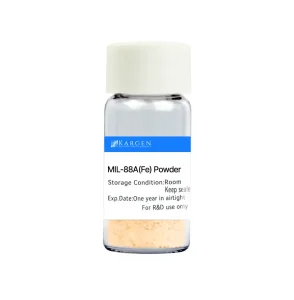
Best MIL-88A(Fe) Powder MOF Supplier for Sydney Eco Projects
Flexible iron fumarate structure with superior biocompatibility and low toxicity. Optimized for aqueous organic dye removal, heavy metal adsorption, and Fenton-like catalytic oxidation in Sydney environmental engineering projects.
View Technical Specs
Best KAUST-7 Powder MOF Exporters for Sydney Gas Separation
NbOFFIVE-1-Ni molecular sieve framework engineered for high-selectivity propylene/propane and ethylene/ethane separations. Provides extraordinary thermodynamic selectivity for Australian petrochemical and specialty gas refiners.
View Technical Specs
High-Quality MIL-100(Al) Powder MOF Suppliers for Sydney Industry
Aluminum trimesate framework featuring dual mesoporous cages (25 Å and 29 Å) accessible via microporous windows. Exceptional surface area and hydrothermal stability for bulky organic molecule adsorption and catalyst support.
View Technical Specs
High-Quality MIL-100(Cr) Powder MOF Exporters for Sydney Research
Chromium trimesate mesoporous framework boasting outstanding chemical and acid stability. Preferred benchmark material for demanding liquid-phase separation, gas phase storage, and rigorous heterogeneous catalysis studies in NSW.
View Technical Specs
Best MIL-100(Fe) Powder MOF Service for Sydney MedTech Labs
Iron-based mesoporous framework synthesized under green, solvent-reduced conditions. Features high pore volume, eco-friendly metal centers, and high sorption performance for water decontamination and controlled delivery systems.
View Technical Specs
High-Quality MIL-101(Al) Powder MOF Supplier for Sydney Clean Tech
Aluminum terephthalate framework exhibiting massive pore dimensions (up to 34 Å) and high BET surface area. Perfect for gas scrubbing, volatile organic capture, and high-capacity desiccant dehumidification applications across NSW.
View Technical Specs
High-Quality MIL-101(Cr) Powder MOF Exporters for Sydney Science
Renowned chromium terephthalate framework offering surface areas exceeding 3,000 m²/g. Unmatched capacity for moisture sorption, methane storage, gas separation, and functional metal nanoparticle encapsulation.
View Technical Specs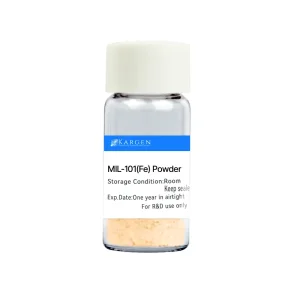
Best MIL-101(Fe) Powder MOF Supplier for Sydney Process Plants
Non-toxic iron terephthalate MOF combining large cage volumes with accessible unsaturated iron active sites. Designed for organic pollutant degradation, selective gas adsorption, and sustainable chemical processing across Australia.
View Technical Specs